Score |
151



Medical laboratory scientist, visual artist @ Lagos
Lagos, Nigeria
 924
924
 1738
1738
 51
51
 63
63
She was mine

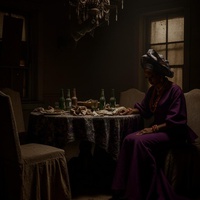
<p>A classic Indian movie scene will have today as a heavy downpour. The clouds would pour themselves on the earth so its inhabitants would mourn with it. But in reality, the sun stands as the witness to our grief.</p><p>People stood with folded arms, and others occupied the few seats available. Consolatory words floated towards my father, of whom the chair seemed like a hot plate. My mum needed it more; she kept muttering words to herself and making intermittent signs and screams as tears escaped her eyes. The congruent reactions eluded me, and for a minute, it dawned on me that maybe grief knows who to avoid.</p><p>Not the first time I’m seeing a lot of people in this house. The setting is familiar, but the ache is different. People came, just like this, for her naming ceremony. A party that welcomed the arrival of Ayomikun into our lives. The attention shrouded me away as the first child, and for me, that was fine. We waited nine years for her to come, and with the Yoruba proverb ómò kan ò kúrò làgan, no one could blame my father for the extravagance it came with. Time had permitted it, and rightfully so.</p><p>When my parents brought home a very fair baby five years ago, joy filled our hearts. My excitement was palpable, overflowing even; I finally had a younger sister. I knew what my life as an elder sister would be: playing around the house, carrying her on my back instead of the lifeless dolls I had grown bored with, and telling boastful tales about her to my friends who already had siblings. I had songs I would teach her as she grew; my name would certainly be the first on her lips. </p><p>I didn't mind that I gradually faded into the background, invisible at times. Visitors only wanted to see the baby and carry her. As she grew, she only became prettier; my pale brown skin was no match for her very fair, flawless skin. And this made me love her more. She was mine. My own sister. She cried in my arms. Her ears were filled with my lullabies. She found comfort sleeping on my back. I loved her in every way.</p><p style="text-align: justify; "><img alt="" src="/media/inline_insight_image/file_00000000f7e871f5b002d98ea0546096.png" style="background-color: transparent;"/>While her beauty captivated family members and neighbours, her health gulped the attention of my parents. Ayomikun's frequent illness was confusing until it was revealed that she had Sickle Cell disease. The news of her genotype was a rude shock, filling our home with chaos and confusion. My father had lied to my mother about his genotype, and suddenly love had consequences no one knew how to carry.</p><p>One day, Ayomikun would dance through the house, her laughter echoing off our walls. The next day, she would be reduced to quiet cries and trembling limbs. She was too young, her body too small to be going through such pain. Most times, her body couldn’t take it, and she would lie almost lifeless.</p><p>By the age of three, Ayomikun had slept in hospital beds more than she had sat in a classroom. Illness was a frequent visitor. Sometimes it announced itself with a scream. Sometimes with a faint. Sometimes, with a phone call from school that tightened the chest before the words were even spoken. She drank anointing oil the way other children drank water. She bathed in it too. Her mouth knew the taste of every concoction my grandmother trusted. And in those moments, my mother would hold her tightly, as though leaving even the smallest space might cause her to slip away, whispering again and again, “<em>Ọmọ mi,</em> <em>ọmọ mi.”</em></p><p>That day did not feel like one of those days. She was fine. Healthy. Ordinary. I was in the living room, bent over my assignment, while she sat nearby with her colouring books. My mother had stepped out to her sewing shop across the road. My father was away. Nothing in the air warned us.</p><p>She did not scream.</p><p>She did not shout.</p><p>Her eyes turned yellow. She clutched her head and broke down, the kind of crying that comes from a place words cannot reach. I knew, instantly, that this pain was heavy. Through her tears, she whispered, “My head is paining me.”</p><p>I wanted to run and call my mother, but my legs betrayed me, rooted to the floor like furniture. My eyes were fixed on hers, both of us crying. I wanted to hold her tightly enough to stop the pain, but all I could whisper was, “<em>Pẹ̀lẹ́"</em></p><p>My mum came in as though she knew. She grabbed Ayomikun and ran as fast as her legs could carry, half shouting for help, half giving me instructions to go and fetch my father. I stayed, couldn't move. Tears filled my eyes and poured out in succession.</p><p>Words flew out of my lips, “Please God, take this pain away”.</p><p>My mother’s tears and shouting were what jerked me back to life, after several hours I couldn't account for. Ayomikun wasn't in her arms as usual.</p><p>The pain had finally ended.</p><p>Today is her burial. It is taboo for parents to know their child’s burial ground.</p><p>I wish they would let my mum know that all the pain she carried for five years finally ended somewhere.</p><p>I left the spot where I had been sitting alone and went to my mother, where she sat with my grandmother and aunties. She gazed at me. Her eyes were bloodshot and half-blinded with tears. She drew me in, as though afraid to lose another child. The warmth of her body, drenched in sweat and tears, engulfed me, and she wh<span style="background-color: transparent;">ispered, “<em>Ọmọ mi.”</em></span></p><p><br/></p>


 72
72



Other insights from Oluwadamilola Adesina









Referral Earning

Points-to-Coupons

Insights for you.





THE MEETING
Sometimes it takes one meeting for our lives to change forever. It was never Femi'...
1383 views
14 upvotes
15 comments


OMÓ ÉSAN
They say the apple does not fall far from the tree, but I was the exception, or I was s...
1343 views
15 upvotes
10 comments




































Comments