March Essay Competition
March 9 — March 22, 2026,

Prompt
The average man, regardless of creed, family background, religion, personal convictions, or social, economic, or marital status, will always feel threatened or intimidated by a successful, strong, independent woman.
Competition Home Page
Essay
Score
I stand by Nuance
March 15, 2026
· 974 words
· 5 min read

⭐ 7th Place
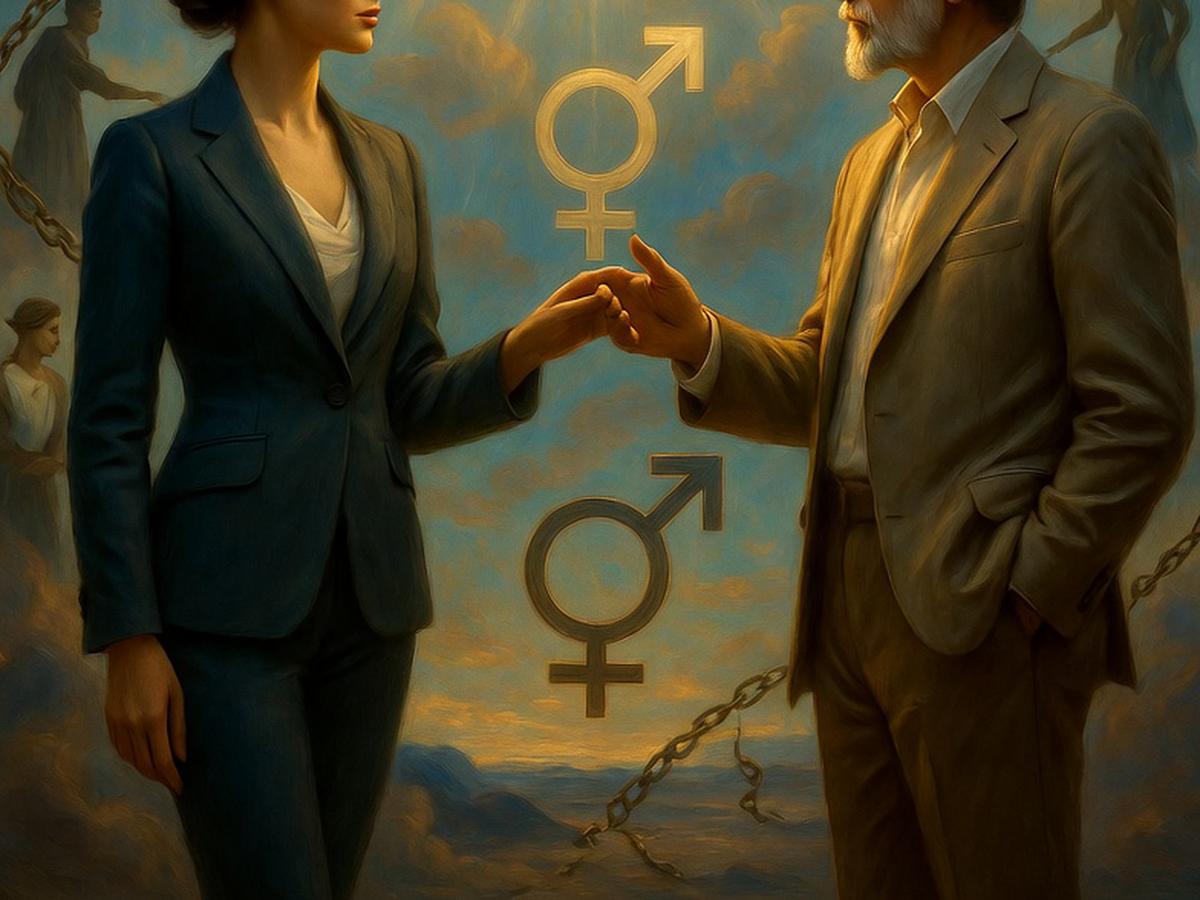
<p><br></p><p><br></p><p> By logic, all serious attempts at grappling with the prompt would have to be nuanced for the sole reason that the question itself demands nothing less. Thus I do not have a simple yes or no to the question.</p><p>It is imperative, first, to separate the wheat from the chaff. Many of the most prominent successful women across fields reached their zeniths not exclusively, but often substantially, with crucial support from men. This holds from Mary Shelley to Marie Curie and Mariah Carey. The pattern makes sense as almost every major sector of human society was founded, developed, and long dominated by men—including gynecology, the medical study of the female body itself.</p><p>But the analysis should not be halted here. Based on our conclusion above — if we decide that the average man isn't threatened by successful women, due to the fact that the existence of successful women means average men were secure enough to work with them and support them, it would be right to play a little devil's advocate to say, the relative scarcity of strong, independent women, might suggest that insecure men within the patriarchal structures are suppressing female potential on a broader scale.</p><p>But this creates an epistemological problem: there is no way of knowing which is true. Further more, we live in such a society where the archetype of the insecure man threatened by strong, successful women, is ubiquitious—seen everywhere, from Hollywood movies, romantic comedy sitcoms, to novels and novellas. So therefore we know something is clearly happening. We just have difficulty in making distinctions between the concrete signals and propaganda noise.</p><p>Should we keep blaming lower female performance on male insecurity, when high performing women are pumped out every year, in this same patriarchy? It is almost impossible to reach a conclusion. By reason, we suppose that all successful women have men backing them, and that unsuccessful women still have men behind them. Whether the failures are engineered by malice or not, is hard to actually conclude on.</p><p><strong>On The Average Man</strong></p><p> Understanding the prompt, we must clarify what an average man means. Marie Curie, for example, benefited enormously from her husband Pierre Curie (himself an accomplished scientist), Albert Einstein’s public defense during her affair scandal, her doctoral advisor Gabriel Lippmann who secured her laboratory space and presented her work to the Académie des Sciences, and Józef Wierusz-Kowalski who introduced her to Pierre. But these were exceptional men, not average ones—not even in their fields. The same applies to the husbands of Beyoncé (Jay-Z) and Rihanna (A$AP Rocky). If these high-achieving men do not represent the “average,” then who does?</p><p>The “average man” is the typical man—the one who shares the common characteristics of men across populations. But the prompt attempts to average across every identity variable that matters (creed, background, religion, convictions, status) while simultaneously claiming they all feel the same way about successful women. This is the fundamental flaw in the question. It casts too wide a net. For the sake of argument, we must assume the prompt is really asking about the majority of men, not some statistical abstraction.</p><p><strong>Does The Great Majority of Men Feel Insecure and Threatened By Strong Independent Women?</strong></p><p>The short answer is no. The longer answer is that the notion itself is largely a myth, born from the confluence of Hollywood portrayals, certain strands of feminism, online misandry, vocal complaints from a minority of dissatisfied men, and a misunderstanding of masculine psychology and sex differences.</p><p>Many men express reluctance to marry women who significantly out-earn them, and this is frequently interpreted as insecurity or feeling threatened, but better explanations exist for this.</p><p><strong>Why Do Men Not Want To Marry Strong, Independent, Women, and Why Is This Framed As Feeling Threatened By Them?</strong></p><p>Most men, like most humans, are sexual beings among other things, who categorize women differently between those they find attractive for short-term relationships, those suitable for friendship, and those they envision as long-term wives and mothers of their children. The prompt collapses these distinctions, even though they are incredibly important to make, as we have to understand whether or not men are threatened by all of these categories or just one or a few.</p><p>Traditional family formation historically positioned the man as primary provider and the woman as nurturer—a division that proved evolutionarily stable for millennia. Many men (particularly traditionally minded ones) still regard this arrangement as optimal. Deviations from it naturally meet resistance. This resistance is often misread as personal intimidation rather than a defense of a preferred relational model.</p><p>Hypergamy—the tendency for women to partner with men of equal or higher socioeconomic standing—further complicates the picture. Women continue to exercise strong agency in mate selection, even in an era of independence and calls for bill-splitting. It is reductive to blame men’s preferences entirely on insecurity while ignoring female choice.</p><p>The traditional man seeking marriage is not looking for another competitor but for a complementary companion. Marriage, in its classic form, is an institution in which a man and woman pledge to build a shared life. Seeking a fiercely independent, high-achieving “equal” in every domain may simply not align with that vision for many men.</p><p>The prompt’s sweeping claim—that the average man, irrespective of all background variables, will always feel threatened—collapses under scrutiny. The category “average man” as framed is incoherent. Traditional men may resist certain modern female archetypes, but not out of threat so much as preference for complementarity. For the broader majority of men, the stereotype of intimidation by successful women does not hold.</p><p><strong>Conclusion</strong></p><p>In conclusion, the “average man” of the prompt does not exist in a form that permits a clean yes-or-no answer. The question itself is a conclusion masquerading as inquiry. Reality is more complex, more human, and far more interesting than the prompt allows: men are not broadly intimidated by successful women, but many continue to value complementarity in long-term partnerships, and this is interpreted as being insecure and threatened.</p><p><br></p>

 12
12


Final score
Average from 2 judges
80.0%
Judge 1 — 75.5%
Judge 2 — 84.5%
Average — 80.0%





































Comments