Score |
24







You Said Yes
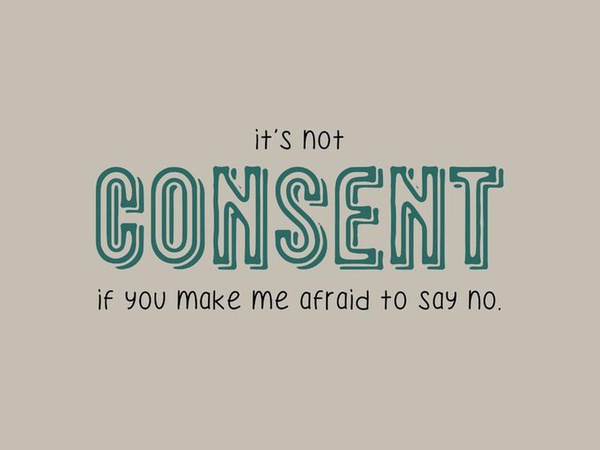
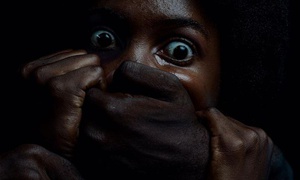
<p>You said yes. Let's be clear about that.</p><p>You said yes the first time, and the second time, and every time after that. You said yes on nights when you were tired and on mornings when you weren't ready. You said yes on days when it felt like the price of a peaceful week. You said yes because you love him. You said yes because it was easier. You said yes because you weren't sure you could say no. </p><p>You said yes. So that should be enough. And yet the question remains.</p><p>Was that consent?</p><p>This essay isn't trying to point fingers at marriage, or men, or desire. Or even you. But there are many versions of you, and we will explore them all. </p><p>You are twenty nine years old and you've been married for three years and you and your husband have built something good together. You have your way of communicating that's honest and safe. What you choose to do in private is adventurous, tender or maybe even both. You've never felt pressured or afraid. Your yes is loud. Your no is respected. You feel completely free with him.</p><p>That kind of marriage exists. That kind of love exists. And what happens inside it is nobody's business. Not the government's. Not the church's or mosque's. Not society's. Not even this essay's.</p><p>Here we have two adults who're fully aware and genuinely free. That is what true consent looks like, and when it is real, it is enough. It's more than enough actually. It is everything.</p><p>But there is another you that this essay owes some honesty to.</p><p>The you that's not tired, not giving up, and not just trying to keep the peace. </p><p>The you that is afraid. </p><p>There is a difference between a marriage that has worn your 'yes' down and a marriage where your 'yes' was never really yours to give, where the alternative to yes was made very, very clear, very early, and very convincingly.</p><p>You have said yes to things that left marks. You have said yes to things that made you feel like a stranger in your own body. You have said yes because the last time you said no, you learned what that no cost. And so you learned to say yes. Yes became the roof over your head and the food on the table and the safety of your children. Yes became the only language available to you in a house that had stopped feeling like a home.</p><p>But it's called consent, isn't it?</p><p>Because you said yes. Because you are his wife. Because what happens in a marriage is private. Because mutual consent is enough.</p><p>But there is nothing mutual about fear. There is nothing consensual about a yes gotten through intimidation, isolation, or violence. There is nothing private about harm, not when harm is being done to a person, inside a bed or inside a marriage, behind a closed door that the law was once too polite to open.</p><p>Let me be clear. Consent matters more than almost anything, but just calling something consent doesn't make it consent. And a marriage license has never been, and should never be, a license for harm.</p><p>Some things do not become acceptable because two people are married. Some things do not become acceptable because one person said yes. And some yeses — spoken in fear, spoken in pain, spoken with nowhere else to go — are not yeses at all.</p><p>They are just the sound a person makes when they have run out of options.</p><p>The law, for once, agrees.</p><p>For most of legal history, marriage was considered implicit and irrevocable consent. A husband could not rape his wife because she had, by the act of marrying him, already said yes to everything, forever, in advance. </p><p>But, thank God, that legal position has now been almost universally abandoned, because the world looked at it clearly and recognised it for what it was: not a protection of marriage, but a protection from harm.</p><p>That is not a small thing. That is the law itself acknowledging that consent must be real, ongoing, and freely given, and that a ring on a finger guarantees none of those things.</p><p>Mutual consent is not a checkbox ticked once on a wedding day. It is a living, breathing, revocable agreement between two people who remain, regardless of their marital status, autonomous human beings with the right to their own bodies.</p><p>Always.</p><p>So back to you.</p><p>You — the one whose yes is loud and free and entirely your own. Keep it. Protect it. What you and your husband build together in private is yours and nobody else's, and no essay, no law, no outside voice should ever reach through that door uninvited.</p><p>And you — the one whose yes has grown quiet. The one who stopped noticing when agreement became automatic. The one who says yes on nights not because she wants to but because the alternative stopped feeling available somewhere down the road. You are not alone. And what you are experiencing has a name, even when it doesn't feel dramatic enough to deserve one.</p><p>And you — the one who recognises herself in these lines. The one for whom this stopped being theoretical a long time ago. You are the reason this conversation cannot end at 'mutual consent is enough'.</p><p>You are the reason the law changed. You are the reason this essay exists.</p><p>Consent matters. It matters more than almost anything in this conversation. But consent is only as powerful as the conditions that make it real — safety, equality, and the genuine, unencumbered freedom to say no.</p><p>Where those conditions exist, consent is everything.</p><p>Where they don't, it is nothing but a word.</p><p>And a word alone has never protected anyone.</p><p></p>


 13
13



Other insights from Maq








Referral Earning
Points-to-Coupons

Insights for you.


What Is your body count ?
The first time I heard that question, I can recall I said “I weigh around 52kg” Yes, I ...
1432 views
8 upvotes
11 comments
THE FLING : STRAIGHT TO THE POINT
Before I met Stanley, I hadn’t been touched in 8months. I had been celibate.
A ...
1096 views
10 upvotes
11 comments

GENDER NEUTRAL?
Can you actually look at someone and say, "na, you look neutral", like is there a bluep...
810 views
6 upvotes
3 comments


The Value Of Self
In today’s society, casual sex has been dressed up as “freedom.”Losing your purity is n...
380 views
7 upvotes
20 comments































Comments