Score |
75








Why Infrastructure Is Defining the Future of New Lagos Real Estate
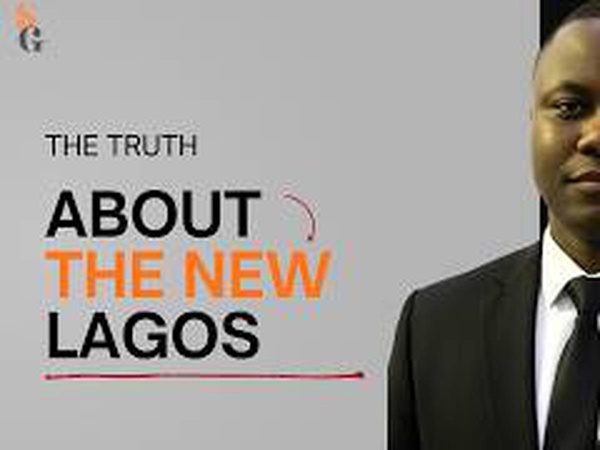
<p><br/></p><p>The conversation around “New Lagos” is no longer just a trend among real estate investors and developers. It is gradually becoming one of the biggest economic and urban development conversations in Nigeria’s property sector.</p><p><br/></p><p>On a recent episode of the <strong>Project Souq Grandeur Podcast</strong>, hosted by <strong>Emmanuel Daniji</strong>, entrepreneur and real estate consultant <strong>Samuel Jacob Lawani</strong> shared deep insights into the future of Lagos real estate, the impact of infrastructure development, and why investors are increasingly shifting attention toward emerging corridors across the state.</p><p><br/></p><p>Samuel, who is the founder of <strong>SAMUELPROPERTIES</strong>, spoke extensively about how infrastructure has historically influenced property appreciation in Lagos and why the current wave of development along the Lekki–Epe axis and surrounding corridors may redefine property investment in Nigeria over the next decade.</p><p><br/></p><p>According to him, the real estate market in Lagos is entering another transformational phase driven largely by infrastructure expansion, urban migration, and growing commercial activity.</p><p><br/></p><h2>The Rise of “New Lagos”</h2><p><br/></p><p>One of the major highlights of the conversation centered around the idea of “New Lagos,” a phrase now commonly used within the property sector.</p><p><br/></p><p>For Samuel, New Lagos represents more than a geographical expansion. He described it as the next economic growth corridor of the state — a region where infrastructure, commercial development, and residential expansion are converging simultaneously.</p><p><br/></p><p>Areas around the Lekki-Epe corridor, Ibeju-Lekki, Epe, and adjoining developing communities are increasingly attracting both institutional and individual investors because of the long-term growth potential attached to them.</p><p><br/></p><p>He explained that Lagos has historically expanded in phases. Years ago, areas that were once considered remote or inaccessible eventually became premium investment locations after infrastructure and commercial activities moved into those regions.</p><p><br/></p><p>Today, the same pattern appears to be unfolding again.</p><p><br/></p><h2>Infrastructure as the Real Driver of Property Value</h2><p><br/></p><p>During the discussion, Samuel emphasized that infrastructure remains one of the strongest indicators of future property appreciation.</p><p><br/></p><p>He pointed to major projects such as the Lagos-Calabar Coastal Highway as examples of developments capable of reshaping entire economic ecosystems.</p><p><br/></p><p>According to him, infrastructure changes everything:</p><p><br/></p><p></p><ul><li>accessibility,</li><li>transportation,</li><li>commercial viability,</li><li>population movement,</li><li>and investor confidence.</li></ul><p></p><p><br/></p><p>He noted that once road networks, transportation systems, and public utilities improve within a corridor, property demand naturally increases. That demand then drives up land prices, rental values, and overall investment activity.</p><p><br/></p><p>The podcast also examined how infrastructure projects influence investor psychology. Samuel explained that buyers and developers often move ahead of development because they understand that property value tends to rise after major government-backed projects become operational.</p><p><br/></p><p>This explains the increasing demand for land banking opportunities within emerging corridors.</p><p><br/></p><h2>Speculation or Genuine Opportunity?</h2><p><br/></p><p>The rapid rise in conversations around New Lagos has also raised concerns about speculation within the market.</p><p><br/></p><p>Addressing this issue, Samuel acknowledged that hype exists within every growing market, but he maintained that the long-term fundamentals supporting the corridor remain strong.</p><p><br/></p><p>He explained that speculative investments become dangerous when buyers purchase property without understanding:</p><p><br/></p><p></p><ul><li>title documentation,</li><li>developmental timelines,</li><li>infrastructure plans,</li><li>or long-term urban planning.</li></ul><p></p><p><br/></p><p>However, he argued that investors who properly study the market and focus on strategically located properties are positioning themselves ahead of future appreciation cycles.</p><p><br/></p><p>According to him, the biggest mistake many investors make is waiting until an area becomes fully developed before entering the market. By that stage, affordability becomes significantly reduced.</p><p><br/></p><h2>The Importance of Master Planning</h2><p><br/></p><p>Another major point raised during the conversation was the importance of master planning in real estate development.</p><p><br/></p><p>Samuel stressed that not every developing area automatically becomes a successful urban center. He noted that organized planning, zoning structures, transportation systems, drainage, commercial integration, and government regulation all determine whether a city expansion succeeds or fails.</p><p><br/></p><p>He explained that investors should pay close attention to:</p><p><br/></p><p></p><ul><li>government development plans,</li><li>approved layouts,</li><li>accessibility,</li><li>environmental sustainability,</li><li>and future commercial projections before making purchasing decisions.</li></ul><p></p><p><br/></p><p>In his view, master planning separates sustainable urban growth from chaotic expansion.</p><p><br/></p><h2>Commercial Real Estate and the Future of the Corridor</h2><p><br/></p><p>While residential development currently dominates much of the conversation around New Lagos, Samuel believes commercial real estate may eventually become one of the region’s strongest sectors.</p><p><br/></p><p>As more people move into developing corridors, businesses naturally follow:</p><p><br/></p><p></p><ul><li>retail outlets,</li><li>shopping complexes,</li><li>office spaces,</li><li>hospitality businesses,</li><li>logistics hubs,</li><li>and mixed-use developments.</li></ul><p></p><p><br/></p><p>He projected that mixed-use developments could become increasingly dominant within the next few years because of changing lifestyle demands and evolving urban structures.</p><p><br/></p><p>According to him, investors who understand commercial positioning early may benefit significantly as the corridor matures.</p><p><br/></p><h2>Investment Strategy in a Developing Market</h2><p><br/></p><p>One of the most practical moments of the podcast came when Samuel discussed investment strategies for buyers with limited capital.</p><p><br/></p><p>Responding to a question about what he would advise someone with ₦10 million to do in today’s market, he emphasized the importance of strategy over emotion.</p><p><br/></p><p>Rather than chasing trends blindly, he advised investors to:</p><p><br/></p><p></p><ul><li>focus on locations with strong future infrastructure potential,</li><li>verify property titles properly,</li><li>understand the surrounding development trajectory,</li><li>and prioritize long-term appreciation over short-term excitement.</li></ul><p></p><p><br/></p><p>He also encouraged young Nigerians to begin investing early rather than waiting for “perfect” conditions.</p><p><br/></p><p>According to him, consistency and proper market knowledge remain two of the strongest advantages within real estate investing.</p><p><br/></p><h2>Beyond Real Estate</h2><p><br/></p><p>Beyond property investment, Samuel’s entrepreneurial journey also extends into entertainment.</p><p><br/></p><p>In addition to leading SAMUELPROPERTIES, he is also the founder of <strong>Fair Haven Record (FHR)</strong>, a growing music label focused on talent development and artist growth within Nigeria’s entertainment industry.</p><p><br/></p><p>His dual involvement in both industries reflects a broader entrepreneurial mindset centered around growth, innovation, and long-term impact.</p><p><br/></p><h2>A Conversation Reflecting Lagos’ Future</h2><p><br/></p><p>The episode ultimately reflected a broader reality shaping Lagos today: infrastructure is redefining economic geography.</p><p><br/></p><p>As the city continues to expand outward, conversations around New Lagos are likely to become even more significant within Nigeria’s property sector.</p><p><br/></p><p>For investors, developers, and young entrepreneurs, the message from the discussion was clear — understanding infrastructure trends, urban planning, and long-term growth patterns may become one of the most important advantages in navigating the future of Lagos real estate.</p><p><br/></p><p>The full episode of the <strong>Project Souq Grandeur Podcast</strong> featuring Samuel Jacob Lawani and hosted by Emmanuel Daniji is available on YouTube.</p><p><br/></p>


 33
33






Other insights from Bigdan













Referral Earning

Points-to-Coupons

Insights for you.


Who is a news reporter?
Last time, we discussed the role and stakes of journalism in our everyday life. This ti...
1270 views
9 upvotes
8 comments

THE FISH HOUSE
One morning, I went with my mum to the … should I say fish house or fish market or fish...
1185 views
32 upvotes
15 comments

Role and Stakes of Journalism
Journalism is a profession that entails collecting, processing, and broadcasting inform...
1099 views
4 upvotes
4 comments






What Makes a Good Journalist?
Journalism is a complex yet interesting job. One has to be passionate about it in order...
732 views
3 upvotes
4 comments
































Comments