Score |
10




Writer. @ University of Abuja




When Work is Repriced
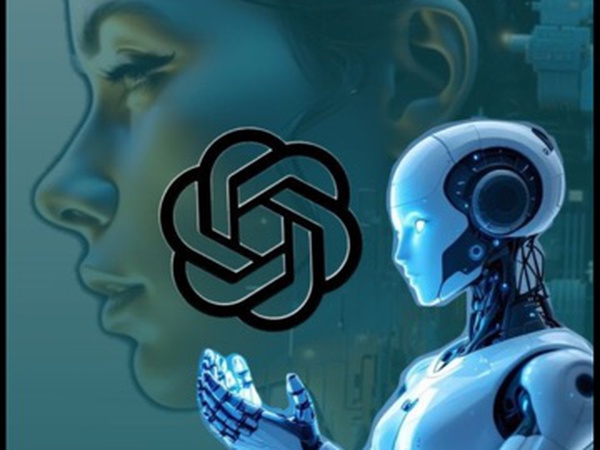
<p>The fastest way to lose a job today is not by being replaced by someone better</p><p>but by being replaced by systems trained on the very work humans once did.</p><p>That is the strange reality shaping the digital economy. Work is no longer only a contest of skill between people. It is increasingly a comparison between human effort and systems that learn from that effort, refine it, and return it at scale.</p><p>To understand what this means, it helps to remember that this is not the first time work has been rewritten.</p><p>During the Industrial Revolution, machines did not erase labour overnight. They first made production faster, then cheaper, then reorganised entire industries around efficiency. What changed was not just how people worked, but what their work was worth.</p><p>Later, computers did the same thing to office work. Filing cabinets became software. Clerks became systems. Repetition slowly disappeared into automation—not through force, but through convenience.</p><p><br/></p><p><img alt="" src="/media/inline_insight_image/IMG_4887.jpeg"/><br/></p><p><br/></p><p>Africa’s path did not follow those steps neatly.<br/></p><p>Many economies skipped phases entirely. Mobile phones arrived before fixed landlines fully dominated. Mobile money systems replaced banking access long before traditional infrastructure became universal. In many places, a phone became a bank, a classroom, and a marketplace at the same time.</p><p>But leapfrogging has always carried a quiet cost: adaptation moves faster than preparation.</p><p>Then came the digital outsourcing era.</p><p>From the early 2000s into the 2010s, global companies began relocating digital tasks—customer support, transcription, moderation, data labeling—to lower-cost regions. Africa entered the global digital economy not through visibility, but through invisible labour powering systems built elsewhere.</p><p>That invisible layer is still here.</p><p>And now it is being used to train the very systems that threaten it.</p><p>Across the continent, workers label images, refine datasets, and correct machine outputs. Humans are still shaping how AI understands the world—but the pace has changed. The system learns faster than the teacher can reset.</p><p><br/></p><p><img src="/media/inline_insight_image/IMG_4886.jpeg"/><br/></p><p><br/></p><p>Economic studies suggest that a large share of work activities globally, roughly a third to nearly half in some sectors, can now be automated or assisted by AI. Not entire jobs vanishing at once, but tasks being removed piece by piece until roles lose their original shape.</p><p>In Africa, the effect is sharper because so much digital employment already sits inside those removable layers of work.</p><p>At the same time, the digital economy is expanding into hundreds of billions of dollars over the coming decades. The opportunity is real. But access is not evenly distributed.</p><p>Some workers operate with stable electricity, reliable internet, and systems that behave consistently. Others are trying to meet the same global deadlines while dealing with outages, unstable networks, and tools that disconnect without warning.</p><p>So when people say “just adapt,” the phrase sounds simple—until you ask who is starting the race halfway through a system they did not design.</p><p>Because AI does not only change what work is done. It changes what work is worth.</p><p>When something that once took hours can now be done in minutes, expectations do not shrink. They expand. Output rises. Standards rise. The baseline moves.</p><p>Efficiency stops being impressive. It becomes assumed.</p><p>And in that shift, routine work does not collapse loudly, it loses value quietly, because it becomes easy to reproduce.</p><p>But the deeper change is this: the distance between idea and execution is shrinking.</p><p>What once required training, teams, and time can now be initiated by a single person with the right tools. That looks like access. And it is. But it also means execution is no longer the rare part of work.</p><p>Execution is becoming cheap.</p><p>Ideas are becoming the scarce part.</p><p>What rises in value instead are the things machines still struggle to hold: judgment, context, creativity, and decision-making in uncertainty.</p><p><br/></p><p><img src="/media/inline_insight_image/IMG_4888.jpeg"/><br/></p><p><br/></p><p>So what future is left for African workers in the digital economy?</p><p>Not a disappearing one. A rearranged one.</p><p>Work built on repetition is shrinking. Work built on thinking, interpretation, and direction is becoming more valuable. But the real divide is no longer just skill—it is timing, access, and infrastructure.</p><p>Who gets to learn the tools early enough to matter.</p><p>Who gets left adapting after the system has already moved forward.</p><p>AI is not slowing down for balance.</p><p>It is setting the pace on its own terms.</p><p>And in a system like that, standing still does not look like stability.</p><p>It looks like silence that arrives too late to correct anything.</p><p><br/></p>


When Work is Repriced
By
Nimmat
•
4 plays
0:00 /
0:00



 9
9



Other insights from Nimmat












Referral Earning

Points-to-Coupons

Insights for you.






CBN'S NEW withdrawal limit policy
A lot of Nigerians, especially business owners and entrepreneurs have been thrown into ...
2137 views
5 upvotes
4 comments


GHANA VS THE EUROPEAN UNION
Chocolates, one of the most loved treats, commercialized in American pop culture as one...
1099 views
6 upvotes
5 comments





My journey:From the Gates of UniAbuja...
The dust of Gwagwalada hung in the air, a familiar yet distinct scent that marked the b...
145 views
18 upvotes
31 comments

Voices in the walls
_Shhhhh... I Heard Myself_Shhhhhh, whispers weave a deadly spell,he says behind the wa...
139 views
11 upvotes
9 comments

Lost at sea
I'm drowning in the thought of you goneA bullet took you, where I belongedI'm lost at s...
123 views
10 upvotes
9 comments






























Comments