Score |
13






A dead man predicted Africa's biggest problem, but nobody listened. 😭💔
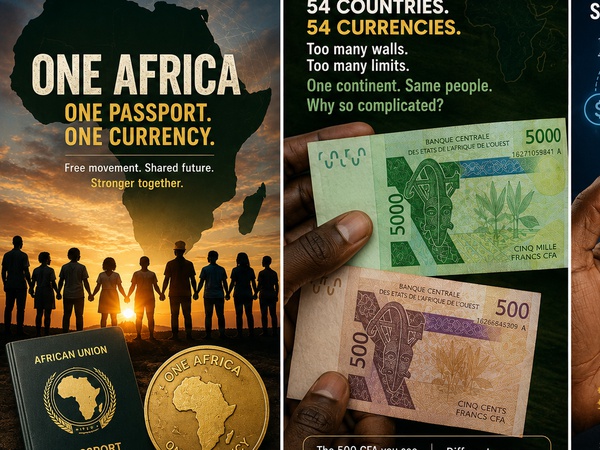
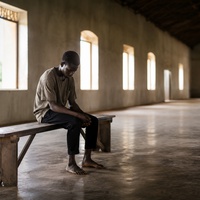
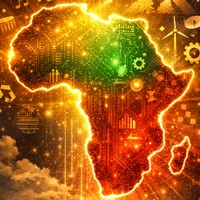
<p>I tried to sell a book to someone from Africa. <span style="background-color: transparent;">It took longer than selling to someone outside the continent. </span></p><p>That small experience changed how I view History forever. </p><p>Let me explain. </p><p>One thing I truly appreciate about history is that it’s not just about the past. <span style="background-color: transparent;">It always connects the past, present, and even the future. </span></p><p>Many people think history is useless. They see it as only old leaders, story, wars, dead people, and dates we memorize for exams. <span style="background-color: transparent;">But history is much bigger than that. </span><span style="background-color: transparent;">It explains why societies are the way they are today. </span></p><p>It explains the issues we accept as normal. <span style="background-color: transparent;">History even suggests solutions long before we’re ready to hear them.</span></p><p>Earlier this week in class, we discussed the <em><strong>Arab Spring</strong></em>, the wave of uprisings that affected North Africa and the Middle East around 2011. When we talked about Libya, one name came up: Muammar Gaddafi. He was a controversial leader and an authoritarian ruler. </p><p>History does not overlook the brutality associated with his government. However, in the midst of all the debates about him, one idea he often promoted stuck with me after class. </p><p>He believed Africa should unite more. He talked about a United States of Africa. One Africa. </p><p>He questioned why Africans needed visas to travel to other African countries. He discussed stronger cooperation, a single African passport, smoother movement across borders, and even conversations about a unified African currency. </p><p><br/></p><p>At first, it sounded like one of those political ideas people cheer for during speeches but then forget. His idea was part of a wider Pan-African vision often discussed at the African Union level, but it never got implemented because of political disagreements and institutional problems. </p><p><br/></p><p>That was until reality hit me. </p><p>Recently, someone from Tanzania wanted to buy my book. </p><p>Just a simple $5 transaction but<span style="background-color: transparent;"> what followed was frustrating and disappointment.</span></p><p>Do you have a dollar account?" I asked. He replied no. </p><p>"PayPal?" He couldn’t even log in. </p><p>"Send Naira?" Not possible</p><p>At one point, he said, “Ooh my card doesn't support that type of payment.” </p><p><img alt="" src="/media/inline_insight_image/4021d2ca254e456c901df3ecac8d8ebc.jpg"/></p><p>Then came another message: “I don’t even have a USD account.” </p><p>I asked myself, Are we not on the same continent? Why is this so hard? </p><p>Why do we even need a USD account at the first place?</p><p>We were two Africans. S<span style="background-color: transparent;">ame continent t</span><span style="background-color: transparent;">rying to complete a $5 transaction. </span></p><p>And we struggled. </p><p>He told me the $5 was around 13,500 Tanzanian shillings. </p><p>That shocked me. it made me think deeply about how economically disconnected Africa still is, even from itself. </p><p><img alt="" src="/media/inline_insight_image/e134032d7a924068b901f05d48c7c273.jpg"/></p><p>I once had a conversation with a close friend in Benin Republic, i asked her for a small amount of CFA francs. When I converted it in my head to Naira, I thought it was something equal to Naira.</p><p>She laughed and corrected me. "No, Naira is worth more. This amount I’m talking about, even as a student here, I can barely access it.</p><p>It shocked me 🥲. Same Africa, same struggle, but the currency confusion makes us misread each other's reality. Small issues feel big, and big issues feel impossible.</p><p>And the CFA franc? Shared by eight West African nations, yet still tied to France and not fully controlled by the African hands that use it daily. It is a shared currency, but still has colonial ties.</p><p><img alt="" src="/media/inline_insight_image/8efa0108c9e44c008020d6cd1f8cb536.jpg"/></p><p>I recalled another experience. </p><p>Some time ago, I went to the bank to pickup my international card for online payments and transactions.</p><p>The card fee alone was difficult for me to afford. I remember standing there thinking, “I need to have this money… but why is it this hard just to access something so basic?”</p><p>It wasn’t even about luxury. It was just access to the digital world, access to opportunities, access to simple transactions.</p><p><img alt="" src="/media/inline_insight_image/09f0e6e0ed684dec8900356638dbe9c8.jpg"/></p><p>And I kept asking myself, why does something so basic feel like a privilege?</p><p>Why does it sometimes feel easier to transact with people outside Africa than with fellow Africans? </p><p>Why must Africans go through dollar systems before helping each other? </p><p>Why are students, creatives, entrepreneurs, researchers, and young people trying to work together across Africa still facing these barriers? </p><p>Even when applying for grants, freelancing platforms or opportunities, many platforms require international payment systems that most ordinary African students don’t have access to. </p><p>In most cases, transfers take up to 5 working days, transaction charges are painful. <span style="background-color: transparent;">Sometimes platforms simply don’t work in specific African countries. </span></p><p>And quietly, opportunities disappear there. </p><p>Projects stop there. </p><p>Dreams fade there. </p><p><img src="/media/inline_insight_image/file_00000000dd6c71f4bc5703fb17405c4f.png"/></p><p>This is why history matters to me. The real issue is not that Africans are unwilling to trade, it’s that the systems were never designed for Africans to trade easily with one another. </p><p>Sitting in that classroom learning about Libya and Gaddafi, I suddenly realized something significant: <span style="background-color: transparent;">Sometimes history pointed out the problem decades ago, so</span><span style="background-color: transparent;">metimes someone already identified the crack in the wall. </span></p><p><br/></p><p>The messenger may have had flaws. The politics may have been contentious. The methods may have failed. </p><p>But the question still remains. </p><p><em><strong>Why is Africa still so tough for Africans? </strong></em></p><p><br/></p><p>Europe has different languages, cultures, and histories, yet many European countries trade easily under one system and one currency through the Euro. </p><p> </p><p>Meanwhile<span style="background-color: transparent;">, Africans still ask each other: </span></p><p>“Do you have a dollar card?” </p><p>Honestly, I think that should concern us a lot more than it currently does. </p><p>Because this is not just about money.<span style="background-color: transparent;"> It’s about the young African with an idea who can’t get support from another African country easily. </span><span style="background-color: transparent;">It’s about the writer who struggles to sell to another African. </span><span style="background-color: transparent;">It’s about the student who can’t access opportunities because systems weren’t made with Africans in mind. Maybe the next step for Africa is not just political unity but also financial and digital unity, systems that allow Africans to move, pay, and build across borders without friction. </span></p><p><br/></p><p> This week History taught me that the<span style="background-color: transparent;"> past isn’t dead. </span><span style="background-color: transparent;">It still speaks through the present. </span></p><p>History is not only what happened to us. It’s what we choose to fix after understanding it. </p><p>One of the biggest mistakes we make is thinking history belongs only in textbooks when, in reality, history is happening around us every single day. </p><p><br/></p><p>Maybe Africa still has unfinished conversations. <span style="background-color: transparent;">And maybe our generation is the one that needs to continue them. </span></p><p>What would change for you if moving money across Africa became easy? <span style="background-color: transparent;">What dream would suddenly become possible? </span></p><p>I genuinely want to know.</p>


 34
34



Other insights from Quareeb Jagun









Referral Earning
Points-to-Coupons

Insights for you.


The Resource Curse
Whenever I think of the plight in Africa, a certain song from my childhood days comes t...
1900 views
9 upvotes
8 comments

BREAST IRONING
Ever heard of the breast ironing practice? well, I am from Cameroon and we have strong ...
1696 views
19 upvotes
23 comments


Africa is rich or poor ?!
To address the issue of poverty and underdevelopment in Africa, it is important to cons...
1362 views
7 upvotes
10 comments


CONCEDING SUPREMACY - THE OWN GOAL PH...
An African man would never agree to the notion that the whites are superior to us. The ...
1329 views
3 upvotes
2 comments

FOR MY WOKE BROTHERS
The death of the Queen of England, is no more breaking news. It's been a week since the...
1180 views
2 upvotes
2 comments

THE REAL WAKANDA IS THE DEMOCRACTIC R...
Sometimes life imitates art, other times art imitates life
The first time I watched...
1179 views
7 upvotes
8 comments

Why have African societies failed?
Where 2 or 3 Africans are gathered, conversations about our countries are sure follow. ...
1174 views
3 upvotes
3 comments


THE DEVIL'S IN THE DETAILS
How do you get someone reliant on you? To get them to follow your every instruction? Th...
818 views
5 upvotes
7 comments


Glory of the Colosseum
The glory of the Colosseum once symbolized the peak of human resilience, the fight for ...
761 views
2 upvotes
5 comments






























Comments