Score |
84







The Marrow of the Machine
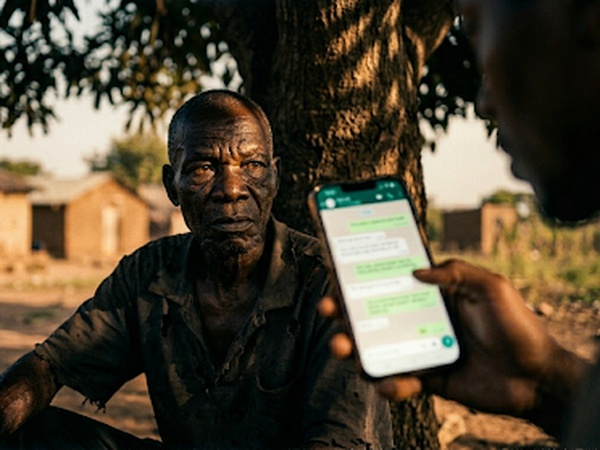
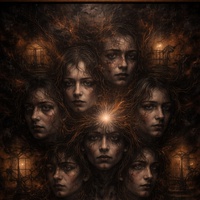
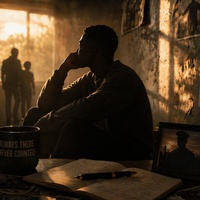
<p>My grandfather sits beneath a mango tree that is dying in a country that feels like it is doing the same.</p><p>He doesn’t speak with nostalgia; he speaks with the weariness of a man who has watched too many things promise to stay, only to let go. "If you are lost," he tells me, his voice as rough as an unpaved road, "you find the elder. He has seen the night. He can guide you through it." He looks at my phone with the quiet suspicion of a man who knows that every shortcut demands a sacrifice.</p><p>Today, my elder is a chat window.</p><p>In Nigeria, survival is a full-time job with no pension and no sick days.</p><p>I am a mathematics student. My project needs data—enrollment, population, employment. In this country, that means hunting for broken puzzles across half a dozen parastatals where data is just a rumor dressed in a government logo. I asked the AI to cross-reference the lies. It caught the contradictions. It showed me truth where our institutions only offered dust.</p><p>I did in an afternoon what should have taken weeks. And I wept. Not from relief, but from the cold realization that this help was always possible; the system just never thought a <em>Nigerian student was worth the effort.</em><strong><img alt="" src="/media/inline_insight_image/588348.png" style="background-color: transparent;"/></strong></p><p><em><strong>The Shame of the Borrowed Voice</strong></em></p><p>A woman I know organizes events. She knows how the chairs should be arranged and how to read a client’s face before they even speak. But she doesn't know the "<em>official</em>" language. She doesn't have the textbook structure.</p><p>She uses AI to stitch together a respectability she was never taught. She gets the contract, then tells no one. She is silent because she is afraid they will call it cheating—or worse, that it proves her own mind was never enough.</p><p>In market stalls and job sites, we are all doing this. We are borrowing a dignity that our government failed to provide, our economy narrowed, and our schools gatekept behind fees we couldn't pay. We are using the machine to fill the holes where our country failed us.</p><blockquote><em><strong>But every oracle requires a blood sacrifice</strong></em></blockquote><blockquote><img alt="" src="/media/inline_insight_image/590250.png" style="background-color: transparent;"/></blockquote><p><strong><br/></strong></p><p><strong><br/></strong></p><p><strong>The Psychic Janitors</strong></p><p>I didn’t know how much it cost until I looked at the marrow.</p><p>In Nairobi, there was a building once called The Soul of AI. Inside, workers earned two dollars an hour to descend into the underworld. Their job was to scroll through graphic violence, child abuse, and the absolute filth of human cruelty—teaching the algorithm what to hide so the West could browse in peace.</p><p>They were the psychic janitors of the internet. They developed PTSD for the price of a loaf of bread. When they tried to unionize, they were discarded. Their trauma was filed under "<em><strong>operational costs</strong></em>" and vanished. They built the village, but they will never afford to live in it.</p><p>The machine is learning our languages now, too. We are recruiting native speakers to feed their grandmothers’ voices into microphones for airtime. We are skinning our culture to feed a beast that will never belong to us. My grandfather speaks Idoma. No AI knows his name. When he dies, his stories go into the ground, <em>and the machine will not mourn a single syllable</em>. <strong>No one paid enough to save them.</strong><em><img alt="" src="/media/inline_insight_image/588435.png" style="background-color: transparent;"/></em></p><p><strong><em>The New Plantation</em></strong></p><p>The data centers are coming. They are rising in Lagos and Nairobi while our national grids collapse. Tech giants tell us the jobs are here. They point to "Technical Talent" initiatives and skills weeks.</p><p><strong><em>But we must ask: Are we building a future, or a digital plantation?</em></strong></p><p>They don't want partners. They want the cheapest possible engine. They want us to cable the buildings, cool the servers, and absorb the trauma of the internet—but they don't want us to own the code.</p><p>With AI advancing at lightning speed, what is left for the African worker? Transformation, perhaps. But only if we refuse to be the cheapest labor in the chain. Only if we remember that our intelligence was never the problem—the gatekeepers were.</p><p>Last week, my grandfather touched my shoulder. His hand, rough as bark, felt like a passing of the torch.</p><p>"So this is your elder now?" "Part of it," I said.</p><p><em>Good. Just remember—the machine can draw the map. But it has no feet, and it does not bleed. You still have to walk the dust."</em>He nodded slowly. </p><p><img alt="" src="/media/inline_insight_image/590174.png"/></p><p>This Workers' Day, do not just marvel at the machine. Mourn what was extracted to build it. Then stand—not with gratitude for the crumbs, but with the full, uncompromising weight of what you are owed.</p><p><strong>Demand your seat at the table you built. The machine can speak now;</strong> it is time we used our own voices to tell the truth.</p><p><br/></p>

The Marrow of the Machine
By
 Matthew Okibe
•
2 plays
Matthew Okibe
•
2 plays
Matthew Okibe
•
2 plays
0:00 /
0:00


 75
75





Other insights from Matthew Okibe







Referral Earning

Points-to-Coupons

Insights for you.






THE MEETING
Sometimes it takes one meeting for our lives to change forever. It was never Femi'...
1360 views
14 upvotes
15 comments


OMÓ ÉSAN
They say the apple does not fall far from the tree, but I was the exception, or I was s...
1302 views
15 upvotes
10 comments

































Comments