Score |
210




I'm Jobless writing stories @ Guardian of Planet Mars




The Art, The Artist, and The Uncomfortable Playlist
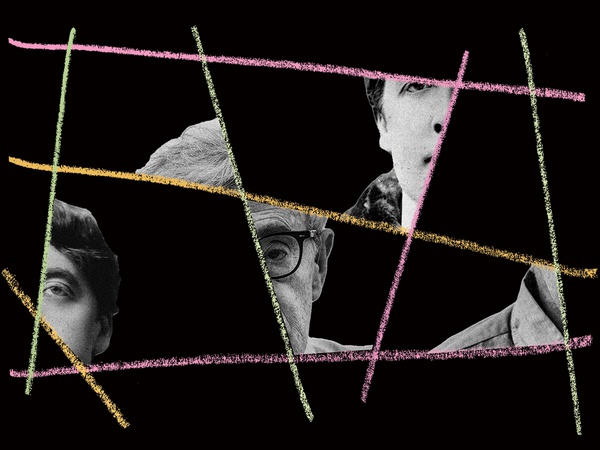
<p><br/></p><p><br/></p><p>My Spotify decided to misbehave the other day.</p><p><br/></p><p>Out of nowhere, it rolled in <strong>Satisfy You by Sean 'Diddy' Combs featuring R. Kelly</strong>.</p><p><br/></p><p>Now before anybody jumps into the comments section with moral fire and brimstone, yes… we all know the complicated realities surrounding these two men today. Their names no longer appear in conversations the way they used to. Instead of Grammys and chart numbers, the discussions now orbit allegations, trials, and the heavy weight of consequences.</p><p><br/></p><p>But here’s the uncomfortable truth that the beat forced me to confront:</p><p><br/></p><p>That song is still a <strong>great record</strong>.</p><p><br/></p><p>Not “good for its time.”</p><p>Not “nostalgic.”</p><p><br/></p><p>Just <strong>great music</strong>.</p><p><br/></p><p>And that realization raises a question the entertainment world has been wrestling with for decades:</p><p><br/></p><p><strong>At what point do we separate the art from the artist</strong>?</p><p><br/></p><p><img src="/media/inline_insight_image/IMG_20260307_001225.jpg"/></p><p>---</p><p><br/></p><p>The Art, The Artist, and The Uncomfortable Playlist</p><p>The debate isn’t new.</p><p><br/></p><p>The entertainment industry has always been filled with individuals whose brilliance existed side-by-side with troubling personal lives.</p><p><br/></p><p>In music alone, history is crowded with examples.</p><p><br/></p><p>The late <strong>Michael Jackson</strong> created timeless records like <strong>Thriller</strong>, the best-selling album in history, yet his legacy remains permanently entangled with controversy.</p><p><br/></p><p>Actor <strong>Kevin Spacey </strong>once delivered unforgettable performances in <strong>The Usual Suspects</strong> and <strong>House of Cards</strong>, only for his career to collapse under serious accusations.</p><p><br/></p><p>Comedian <strong>Bill Cosby</strong>, once celebrated as America’s TV dad through <strong>The Cosby Show</strong>, became a symbol of how public image can hide darker realities.</p><p><br/></p><p>Even in film direction, <strong>Roman Polanski </strong>made cinematic masterpieces like <strong>The Pianist</strong>, yet his personal history has shadowed every conversation about his work.</p><p><br/></p><p>These cases leave society stuck between two uncomfortable truths:</p><p><br/></p><p><strong>1. The work is often brilliant.</strong></p><p><strong>2. The creator may be deeply flawed.</strong></p><p><br/></p><p>---</p><p><br/></p><h3>Is Art Bigger Than Its Creator?</h3><p><br/></p><p>Some argue that art should stand alone.</p><p><br/></p><p>Once a piece of music, film, or painting enters the world, it stops belonging entirely to the person who made it.</p><p><br/></p><p>A song becomes the soundtrack to someone’s first love.</p><p>A movie becomes the memory of a family night.</p><p>A poem becomes the words someone uses to survive heartbreak.</p><p><br/></p><p>In that sense, art transforms into <strong>shared human experience.</strong></p><p><br/></p><p>When <strong>Satisfy You</strong> dropped in 1999, it wasn’t about courtroom headlines or cultural debates. It was about radio rotations, slow jams, and the era when Bad Boy Records ruled the charts.</p><p><br/></p><p>The music meant something <strong>beyond the men who made it.</strong></p><p><br/></p><p>---</p><p><br/></p><h3>But Consumption Is Also Power</h3><p><br/></p><p>On the other side of the debate is a powerful argument:</p><p><br/></p><p>Listening, streaming, or buying someone’s work <strong>can feel like rewarding harmful behavior</strong>.</p><p><br/></p><p>In the streaming age, every play is a micro-payment.</p><p>Every view is attention.</p><p>Every mention fuels relevance.</p><p><br/></p><p>So the question becomes ethical rather than artistic:</p><p><br/></p><p><strong>Does appreciating the art indirectly sustain the artist?</strong></p><p><br/></p><p>This is where modern audiences are different from past generations. Social media has turned fans into moral juries. Cultural consumption now carries a layer of accountability that previous eras rarely faced.</p><p><br/></p><p>---</p><p><br/></p><h3>The Middle Ground Few People Admit</h3><p><br/></p><p>Most people secretly live in the grey area.</p><p><br/></p><p>They might condemn the actions of a celebrity… yet still keep a few songs buried somewhere in their playlists.</p><p><br/></p><p>Because human beings are complicated.</p><p><br/></p><p>And art, perhaps more than anything else we create, carries emotional memory that logic cannot easily erase.</p><p><br/></p><p>A melody can pull you back to a moment in your life that has nothing to do with the person who wrote it.</p><p><br/></p><p>---</p><p><br/></p><h3>The Bigger Question</h3><p><br/></p><p>Maybe the real question isn’t simply “<strong>Can we separate art from the artist?”</strong></p><p><br/></p><p>Maybe the deeper question is:</p><p><br/></p><p><strong>What do we do when the art is undeniable but the artist is disappointing?</strong></p><p><br/></p><p>Do we erase the work?</p><p><br/></p><p>Do we archive it as cultural history?</p><p><br/></p><p>Or do we acknowledge both truths at the same time — the beauty of the creation and the imperfection of the creator?</p><p><br/></p><p>---</p><p><br/></p><h3>TwoCents Takeaway</h3><p><br/></p><p>Art may come f<strong>rom</strong> the artist, but once it reaches the world, it begins to <strong>belong to the audience.</strong></p><p><br/></p><p>The creator may fall, but the creation often continues to live in the memories, emotions, and experiences of those who connected with it.</p><p><br/></p><p>---</p><p><br/></p><h3>TwoCents Reflection</h3><p><br/></p><p>Perhaps the real maturity of a society is not pretending these contradictions don’t exist.</p><p><br/></p><p>It is learning how to confront them honestly.</p><p><br/></p><p>Because sometimes the playlist reminds us of a difficult truth:</p><p><br/></p><p><strong>Great</strong><strong> art can come from flawed humans</strong>.</p><p><br/></p><p>And the conversation about what to do with that reality… is far from over.</p><p><br/></p><p>---</p><p><br/></p><p>So let’s argue this properly.</p><p><br/></p><p><strong>Should the art be judged separately from the artist?</strong></p><p>Join the conversation in the comments.</p><p><br/></p>

The Art, The Artist, and The Uncomfortable Play...
By
 Bigdan
•
5 plays
Bigdan
•
5 plays
Bigdan
•
5 plays
0:00 /
0:00


 44
44







Other insights from Bigdan










Referral Earning

Points-to-Coupons

Insights for you.


MUSICIANS AND POLITICS
Another election season is upon us, and everyone is seemingly involved in one or tw...
1188 views
10 upvotes
4 comments


I AM LEGEND!!!
So I think last year or two years ago, Wendy Williams was hosting her iconic Wendy's mo...
1012 views
4 upvotes
3 comments

SAMPLE!!! EKWE!!!
Oh how I have missed writing about music🤗🎭
It is my first love after all💟💟💟💟💟
Oka...
1007 views
6 upvotes
2 comments

THE 360
You are probably wondering why we are talking about degrees.
Your mind is probably s...
966 views
5 upvotes
2 comments
























Comments