Score |
141




Architect @ James Cubitt Architects




Passion's Tragedy
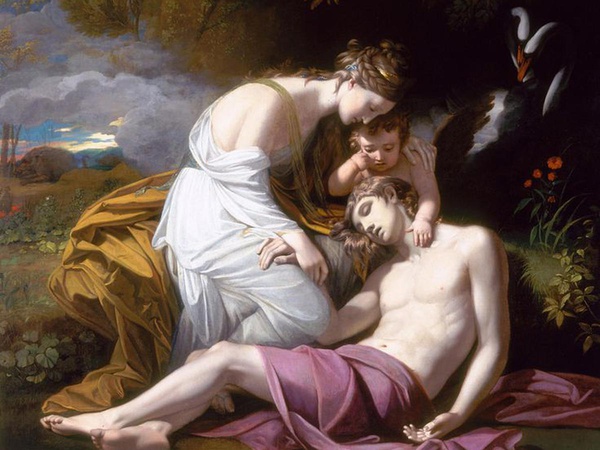
<p>Once upon a time, romantic love came to be. In one version of the story, the pair of hearts are ignited and under the pressures of the world around them, their passion is benefited of in stolen moments; but it is ultimately short-lived. One in the least must depart; death takes them or distance pulls them apart. In another genre of the tale, the lovers long for each other with all their being; time, space and society against them and yet; they succeed in cheating reality and falling deeper into each other, but then once together there is pain because the ennui of the every day together is against them and one day, like all things they must die. One before the other so that heartbreak is inevitably experienced even for a moment by one of the pair.
</p><p><br></p><p><img src="/media/inline_insight_image/8bpt8w88.png" alt=""><br></p><p><sub>Eros; from learn religions</sub></p><p>When a love story is dramatised it is often in the form of the former. Tragedy and romance have come to be intimately entwined in the stories we tell ourselves. the romantics of this age must ask themselves how they have come to be so afflicted: Born into a world that sings the praises of passionate everlasting love - a fantasy that eludes the majority. The problem is not that love is unable to last; it is, however, that the passionate love of Hollywood was not initially tied to perpetual existence - the dizzying love of Aphrodite was always -in its conception -impermanent.
</p><p>In the 18th century, a movement known as Romanticism swept through Europe. The ideals of romanticism fought classic values and emphasised the place of individualism, passion and emotion in the understanding of the world. Young people around Europe were for the first time being told to choose marriage partners based on the emotional ties they felt. Historically marriage had been a pragmatic decision - done for favourable alliances and legitimate childbirth. Not so with romanticism; we now had to be in deep fervent love to marry a person. Paradoxically this passionate and oft erotic attachment was now presumed to last forever. The problem with the unification of marriage and romance was that romantic love or Eros was initially conceptualised as fleeting.
</p><p>In a 3rd century BC tale, the Greek goddess of sexual love, Aphrodite is struck by one of the arrows of Eros, the god of romantic love. She falls immediately in love with a man so beautiful he is considered a god himself; Adonis. The story tells of the jealousy that builds in Aphrodite's other lover Ares, the god of war, and the resentment that grows in her son Eros. One day while Adonis bathes, the queen of Hades, Persephone observes from the bushes - his beauty is captivating even to the gods and Eros ceases the moment to fire one of his arrows. Persephone, here symbolising death, is struck with a profound attraction to the object of Aphrodite's desire and although she avoids trouble with the goddess’ wrath, she bids her time. One day Adonis is on a hunt and Ares has found his moment. He infects a Wild boar with rage and goads the young Adonis with blood lust. Although he is skilled in the hunt, the youth is slain at the foot of the beast and so Hades’ queen claims her love. Aphrodite is devastated and holding her lover in her hands, her tears mix with his blood and there sprouts the anemone flower. Here in this tale, we see the coming together of Love and tragedy even in early thinking.
</p><p><br></p><p><img src="/media/inline_insight_image/ge19r8lp.png" alt=""><br></p><p><sub>Eros infecting with love; from learn religions</sub></p><p>Romantic love is psychologically seen as a yearning for immortality beyond the physical plane. What use is a long drawn-out mortal love when death and eternal life allow for timeless passion? In this way, we see how romance flirts with untimely ends - the happy ending from the perspective of romance is the tragic finale. Fiery passion implicitly contains this desire - the urge to burn bright and fast, being quickly extinguished so that love might live on in the union of kindred spirits. In the tale above; although Adonis dies he is resurrected by Zeus and allowed to steal moments once again with Aphrodite once again in the spring. The tragic end is what allows his love to endure for all time.
</p><p>“Speak of her over my grave and watch how she brings me back to life.” - Author unknown (presumably Mahmoud Darwish)
</p><p>We, however, live in an age of romanticism. Now the paradox of blazing passion and classical pragmatic marriage are united. The films and books we watch have shifted from tragedies to happily ever afters (crucially never shown) and as we try to live out these stories it might be wise to recall the place for Eros and the different pleasures one might derive from long practical unions and friendship. Maybe the legacy of romanticism is salvation from tragic romantic endings, and the introduction of a transition into the quiet, steady flame in the hearth of the family home.
</p><p><br></p><p>
</p><p>
</p><p>
</p><p>
</p><p>
</p><p>
</p>


Passion's Tragedy
By
 Joshua Omoijiade
•
1 play
Joshua Omoijiade
•
1 play
Joshua Omoijiade
•
1 play
0:00 /
0:00


 735
735




Other insights from Joshua Omoijiade











Referral Earning

Points-to-Coupons

Insights for you.


The perks of being Socially Awkward
One of my favourite series on Netflix is the Good Doctor. I saw the trailer and got hoo...
1114 views
15 upvotes
9 comments




The Architecture of Grounded Freedom
"Air is the element of freedom. The Air Nomads detached themselves from worldly concern...
950 views
5 upvotes
6 comments


In Praise of Perrons
I peered from a rooftop one cloudy afternoon and from that vantage I saw the sides of t...
931 views
9 upvotes
7 comments































Comments