Score |
212



Student| Writer|Speaker| Growing Something here| Come with me @ NOUN




Worine akpo (My Home)
<h1>In 1964, when the country was still learning how to call itself one name, Ola Soyinka was posted to Sagbama — a village where rivers carried stories and the wind carried the scent of salt and smoked fish.</h1>
<p>He was still adjusting to heavy rains, the long journeys along muddy paths and narrow canoes, and the government quarters perched on stilts above restless water. Even stepping outside felt like crossing a battlefield of planks and tide.<br/>One afternoon, while pricing smoked catfish in the market, he saw her.<br/>She stood behind her stall, her wrapper tied firmly around her waist, her movements precise and confident, her laughter bright but measured. She was exactly as he imagined in his minds eye.</p><br/>
<p><img src="/media/inline_insight_image/1000144619.jpg"/><br/>Under the hot sun, Ola lost his mind. But he did not rush. He watched. In that short time, he learned her name: Tare. He noticed how she negotiated boldly, never lowering her voice too much, yet always respectful. Her tone had polish — he guessed she had attended a missionary school — but her feet were firmly planted in the soil of Sagbama.<br/></p><p>He began visiting her stall — not every day, but often enough that the market women whispered about the way his eyes followed her.<br/>From small conversations, from watching her help her mother, from seeing how she greeted elders with care, Ola began to see not just a woman — but a wife.<br/>Tare noticed his interest. Deep down, she wanted him too. But she carried herself with discipline, letting him speak first, letting the moment unfold.<br/>When Ola returned home, he told his family about her. Soon, they traveled to Tare’s house to state their intentions.<br/>Ola prostrated before her father.</p><br/>
<p>Their spokesman spoke carefully:</p><blockquote>“Pa Ozori, in Yoruba we say ekaro, but in Ijaw, we greet you with respect.”<br/>He continued in Ijaw:<br/>“Wari ere ogbo, emi ibifaa.<br/>We bring you palm wine — a sign of openness and sincerity. If you accept it, then we may speak.”</blockquote><p><img src="/media/inline_insight_image/1000144607.png"/></p><br/>
<p>Pa Ozori accepted the palm wine.<br/>“Our son found a beautiful flower named Tare in your compound. But what you find that is not yours belongs to someone. So he came to us, and we have come to ask permission to pluck this flower.”<br/>Pa Ozori nodded slowly. “I will like to think about it. Make we know your son first.</p><br/>
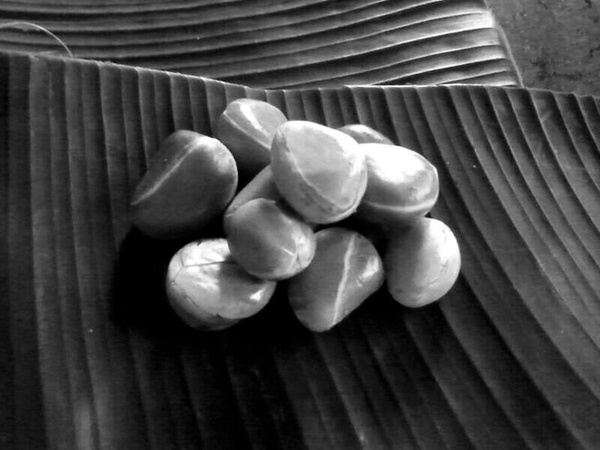
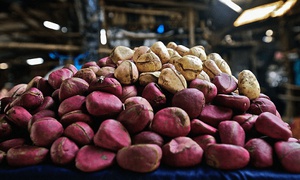
<p> Young man, wetin be your name?</p><p><br/>Ola stood again and prostrated. “Sir, my name is Ola Soyinka.</p><p><br/>“What makes you think you can take care of my daughter?</p><p> Do you have a job?</p><p><br/>“Yes Sir, giving me your daughter will be a privilege,I am a soldier, sir. Two stars.”<br/>There was silence.<br/>“We will think about it and get back to you.”<br/>The spokesman stepped forward again.<br/>“We offer you kolanut — a sign of unity.”</p><br/>
<p><img alt="" src="/media/inline_insight_image/1000144613.jpg"/></p>
<p>Pa Ozori said his people went to find out about Ola first then agreed </p><p>Introductions were made. Lists were exchanged. The chief was informed. The canoe was discussed. Everything was done properly.</p><p><br/></p><p>Ola married Tare and took her to his house in Bayelsa. When she became pregnant, he sent her to stay with his parents, as tradition required. </p><p><br/>But living in her in-laws’ house was a different river altogether.</p><p><br/>Her father-in-law called himself a “traditional man,” but tradition, in his mouth, sounded like control. He measured her every move. Her mother-in-law was always grumpy, insisting Tare must learn their dialect perfectly — her mother tongue was not enough.</p><p> She complained about Tare cooking starch and Banga soup for her grandchild. “The boy must eat only his father’s food,” she insisted. She forbade Tare from teaching Jide ( Tare's son) Ijaw language.</p><p><br/>Every attempt Tare made to please them was met with resistance.</p><p><br/>One evening, after swallowing her pride too many times, she spoke.</p><p><br/>“Mama, Papa… Ola no give me belle carry come this house. I no be all those waka-waka girls wey no dey stay for one place. Why be like say every time I try to please una, una no dey send me?”</p><p><br/>She swallowed.</p>
<p><br/>“You see me. Ola marry me come this house proper. I respect una. I stand gidigba. Abeg, I offend una?”</p><p><br/>Silence filled the room.</p><p><br/></p><p>It was all in her head, although she wished she said those words to them, leaving under the pretext of visiting Ola was the best decision she made.</p><p><br/>She packed and left.</p><p><br/>When she returned to Bayelsa. </p><p> That was what Ola had been waiting for. Each time he had suggested they return together to speak to his parents, she had hesitated, trying to endure. This time, she chose herself.<br/>And here, by the rivers of Bayelsa, Tare whispered her Ijaw words to her son: small songs of rivers and palm wine, names of fish and trees.</p><p><br/>She cooked her starch and Banga soup without apology. </p>
<p>She laughed in her own tongue. She taught her son the words she had learned from her mother and his father, the songs of her people, the foreign tongue that felt like an acquaintance who wanted to be a friend, the cadence of her rivers.</p><p>The country was still learning its name.<br/>And She was learning to</p><p>.<br/></p><p><img src="/media/inline_insight_image/1000144610.jpg" style="color: inherit; font-family: inherit; background-color: transparent;"/></p>


 107
107



Other insights from That_Girl_Trust✍🏼













Referral Earning

Points-to-Coupons

Insights for you.






THE OSU CASTE SYSTEM
You might have heard of the Osu caste system in Igbo land. In case you haven't, this is...
1553 views
2 upvotes
2 comments































Comments