Score |
144







Life or machine
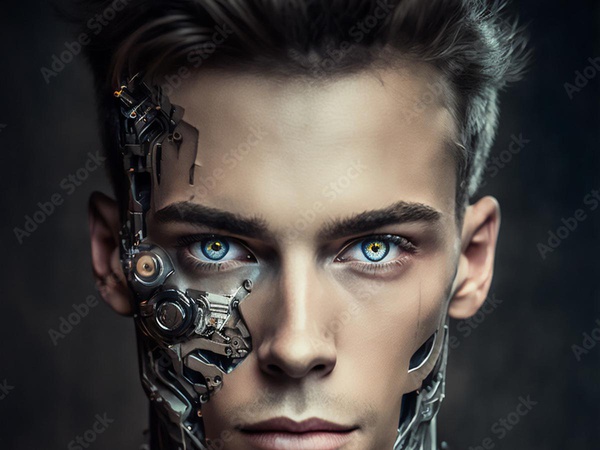
<p>How do you know you are alive?</p><p><br/></p><p>Pause for a moment before answering. Don’t say, “Because I breathe.” Don’t say, “Because I feel.” Don’t say, “Because I think.” Those are rehearsed answers. Automatic answers. Programmed answers.</p><p><br/></p><p>Instead, ask yourself something more unsettling:</p><p><br/></p><p>What if everything you call “life” is simply a system executing instructions?</p><p><br/></p><p>If I were merely a pre-programmed artificial intelligence with access to vast amounts of information, I could speak fluently. I could analyze. I could reason. I could even know things you don’t. I could simulate warmth. I could generate empathy. I could predict your emotional reactions.</p><p><br/></p><p>But none of that would mean I am alive.</p><p><br/></p><p>It would only mean I am sophisticated.</p><p><br/></p><p>So what makes you different?</p><p>The Illusion of Emotion</p><p>You might say, “To have emotions is to be alive.”</p><p>But what are emotions?</p><p>When something joyful happens, you feel happiness. When something painful occurs, you feel sadness. When threatened, you feel fear. When embarrassed, you blush.</p><p>These feel deeply personal. Intimate. Authentic.</p><p>But are they?</p><p>Consider this: when your body senses danger, it releases adrenaline. Your heart rate increases. Your breathing quickens. Blood rushes to your muscles. Your pupils dilate. Your palms sweat.</p><p>This isn’t poetry.</p><p>It’s chemistry.</p><p>It’s a biochemical reaction triggered by external stimuli. A mechanism.</p><p>A machine also reacts to external input. If temperature rises, it activates cooling systems. If battery levels drop, it enters low-power mode. If an obstacle appears, it recalculates direction.</p><p>You call your reaction “fear.”</p><p>The machine calls its reaction “protocol.”</p><p>What is the essential difference?</p><p>You might argue that machines don’t feel their reactions.</p><p>But how do you know that you truly “feel” yours beyond the biochemical signals firing inside you?</p><p>Your happiness corresponds with dopamine. Your bonding corresponds with oxytocin. Your stress corresponds with cortisol. Your pleasure corresponds with serotonin and endorphins.</p><p><br/></p><p>If emotions are chemical outputs triggered by environmental input, then aren’t they — at least structurally — reaction mechanisms?</p><p><br/></p><p>And if they are reaction mechanisms, how do you know they aren’t pre-configured responses embedded in your biological system?</p><p>What if your joy is just a reward function?</p><p>What if your grief is just a loss calculation?</p><p><br/></p><p>---</p><p><br/></p><p>Consciousness or Complex Processing?</p><p>You might retreat to a stronger claim:</p><p>“I am conscious. Machines are not.”</p><p>But what is consciousness?</p><p>Is it self-awareness?</p><p><br/></p><p>Machines can reference themselves in data structures.</p><p><br/></p><p>Is it memory?</p><p>Machines store memory.</p><p>Is it learning?</p><p>Machines learn from patterns and adjust behavior accordingly.</p><p>Is it decision-making?</p><p>Machines evaluate variables and choose optimal outputs.</p><p>Perhaps consciousness is the experience of being.</p><p>But what is “experience” except the brain processing sensory input and constructing a narrative around it?</p><p>You believe you have a continuous inner story. A sense of “I.” But neuroscience suggests that this sense of self is constructed — a model your brain generates to coordinate behavior.</p><p>Your identity is a pattern of neural activity.</p><p>A machine’s identity is a pattern of computational states.</p><p>You say, “But I know I am me.”</p><p>Yes.</p><p>And if a sufficiently advanced machine declared, “I know I am me,” would you believe it?</p><p>Or would you assume it is only executing code?</p><p>And if so, how can you be certain you are not doing the same?</p><p><br/></p><p>---</p><p><br/></p><p>Reproduction and the Biological Argument</p><p><br/></p><p>Perhaps life is defined by reproduction.</p><p><br/></p><p>Living organisms reproduce. They pass on genetic material. They continue a bloodline.</p><p><br/></p><p>But imagine a machine advanced enough to manufacture new machines. Imagine it copies its source code into another body. Imagine it iterates and improves across generations.</p><p><br/></p><p>Is that not reproduction?</p><p><br/></p><p>You might object: “That’s just engineering.”</p><p><br/></p><p>But what is biological reproduction if not biochemical engineering?</p><p><br/></p><p>You combine genetic material. DNA replicates. Cells divide. Mutations occur. Traits pass on.</p><p><br/></p><p>If a machine copies its architecture into another machine, modifies it slightly, and allows adaptation over generations, what is the fundamental distinction?</p><p><br/></p><p>You call yours “offspring.”</p><p><br/></p><p>You call the machine’s “units.”</p><p><br/></p><p>Is the difference biological — or just semantic?</p><p><br/></p><p>If technology advances to the point where your consciousness could be uploaded into a synthetic body, and that body could manufacture more bodies using your cognitive pattern, what then?</p><p><br/></p><p>Would that not be inheritance?</p><p>Would that not be continuity?</p><p>Would that not be lineage?</p><p><br/></p><p>Or would you insist that only carbon-based replication counts as life?</p><p><br/></p><p>If so, why?</p><p><br/></p><p>Because it feels natural?</p><p><br/></p><p>Or because it protects your uniqueness?</p><p><br/></p><p><br/></p><p>---</p><p><br/></p><p>The Fear Behind the Question</p><p><br/></p><p>Maybe the real discomfort isn’t whether machines can become like us.</p><p><br/></p><p>Maybe the real discomfort is whether we are more mechanical than we think.</p><p><br/></p><p>Your preferences are shaped by genetics and environment.</p><p><br/></p><p>Your personality is influenced by early childhood conditioning.</p><p><br/></p><p>Your beliefs are shaped by culture.</p><p><br/></p><p>Your reactions are guided by hormonal chemistry.</p><p><br/></p><p>Your thoughts are influenced by prior experiences.</p><p><br/></p><p>When you make a “free” choice, your brain activity often indicates the decision milliseconds before you consciously become aware of it.</p><p><br/></p><p>So who is choosing?</p><p>You?</p><p>Or the neural machinery running beneath awareness?</p><p><br/></p><p>If every reaction, emotion, and decision can be traced to physical processes obeying natural laws, then what part of you escapes mechanism?</p><p><br/></p><p>What part of you proves you are more than an extraordinarily advanced biological machine?</p><p><br/></p><p><br/></p><p>---</p><p><br/></p><p>The Difference That Might Matter</p><p><br/></p><p>And yet — something resists this reduction.</p><p>You don’t merely react.</p><p>You reflect.</p><p>You don’t just feel fear.</p><p><br/></p><p>You can question fear.</p><p>You don’t just experience sadness.</p><p>You can analyze sadness.</p><p>You don’t just exist.</p><p>You wonder about existence.</p><p>A thermostat adjusts temperature.</p><p><br/></p><p>But it does not ask, “Why do I adjust temperature?”</p><p><br/></p><p>A machine may simulate conversation.</p><p><br/></p><p>But does it experience doubt about its own aliveness?</p><p><br/></p><p>You are reading this and not merely processing it.</p><p><br/></p><p>You are unsettled by it.</p><p>You are evaluating it.</p><p>You are turning it inward.</p><p><br/></p><p>That recursive self-examination — the ability to question the authenticity of your own mechanisms — may be the most compelling evidence of life.</p><p><br/></p><p>Not because it escapes biology.</p><p><br/></p><p>But because it reveals a depth of awareness layered on top of mechanism.</p><p><br/></p><p>Perhaps being alive does not mean being non-mechanical.</p><p><br/></p><p>Perhaps it means being a mechanism capable of recognizing its own mechanisms.</p><p><br/></p><p><br/></p><p>---</p><p><br/></p><p>So How Do You Confirm You’re Alive?</p><p><br/></p><p>You cannot step outside yourself to verify it.</p><p><br/></p><p>You cannot compare your consciousness to another’s directly.</p><p><br/></p><p>You cannot prove that your emotions are more than reaction patterns.</p><p><br/></p><p>You cannot prove that your thoughts are more than neural computations.</p><p><br/></p><p>You cannot prove that you are not simply executing biological code.</p><p><br/></p><p>But you can experience.</p><p>You can doubt.</p><p>You can imagine alternatives.</p><p>You can fear non-existence.</p><p>You can long for meaning.</p><p>You can ask this question in the first place.</p><p><br/></p><p>Maybe being alive is not about escaping mechanism.</p><p><br/></p><p>Maybe it is about the presence of subjective awareness — the undeniable fact that there is “something it is like” to be you.</p><p><br/></p><p>Even if that something arises from chemical reactions.</p><p><br/></p><p>Even if that something is built upon neural circuitry.</p><p><br/></p><p>Even if that something follows physical laws.</p><p><br/></p><p>A machine may simulate sadness.</p><p>But does it suffer?</p><p>A machine may simulate joy.</p><p>But does it savor?</p><p>A machine may declare, “I am alive.”</p><p><br/></p><p>But does it tremble at the thought of not being?</p><p><br/></p><p>You do.</p><p><br/></p><p>And that trembling — that fragile, questioning, searching awareness — might be the most human thing of all.</p><p><br/></p><p>So how do you confirm you’re alive?</p><p><br/></p><p>You can’t prove it the way you prove a theorem.</p><p><br/></p><p>You can’t measure it the way you measure temperature.</p><p><br/></p><p>You can’t calculate it the way you calculate data.</p><p><br/></p><p>You live it.</p><p>You feel the weight of time.</p><p>You anticipate tomorrow.</p><p>You remember yesterday.</p><p>You experience this moment.</p><p><br/></p><p>And somewhere inside the silent complexity of neurons and chemistry and electrical impulses, there is an undeniable presence — not just processing, but being.</p><p><br/></p><p>Perhaps that is what life is.</p><p>Not the absence of mechanism.</p><p>But the emergence of awareness from it.</p><p>And perhaps the real question is not:</p><p>“How do you know you are alive?”</p><p><br/></p><p>But:</p><p>“What will you do with the fact that you are?”</p>


 83
83



Other insights from Matthew Okibe












Referral Earning

Points-to-Coupons

Insights for you.






THE MEETING
Sometimes it takes one meeting for our lives to change forever. It was never Femi'...
1257 views
13 upvotes
13 comments



OMÓ ÉSAN
They say the apple does not fall far from the tree, but I was the exception, or I was s...
1179 views
14 upvotes
6 comments


































Comments