Score |
212




Momma's Boy @ Abubakar Tafawa Balewa University Bauchi
Bauchi, Nigeria
 3410
3410
 4238
4238
 234
234
 207
207
Knowledge vs Information in the Digital Age
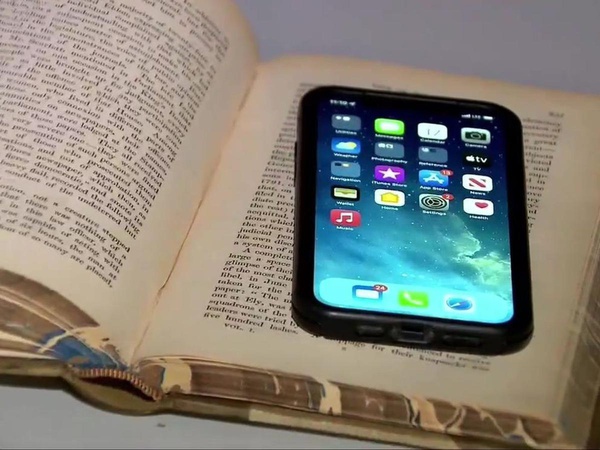
<p>With every age, with every innovation, with every advancement, there must be detractors. Nay sayers that cling tightly to the ways of old. There was the age of the scribes, painstakingly emptying pots of ink turning blank pages of paper and parchment into neat scribbles and strokes that contain reality. Then came the printing press and the scribe in all his sagely significance, succumbed to obsoletion. Then knowledge became wind. It spread, it permeated, it multiplied and built homes not only within a special class but knowledge became accessible to most, populating the minds of the populace. </p><p><br/></p><p>Knowledge drove progress. Ideas were born. Ideas were spread and Ideas gave rise to even more ideas. Like a unicellular organism knowledge grew at exponential rates. Books were the helmsmen that propelled mankind as a species. Art, history, the sciences where all burdens delivered to us on the spines of books. Born in minds. Carried in books. And mankind continued to advance. </p><p><br/></p><p>Come the 21st century, the internet had reduced the world in time and space and spread webs over the earth in its civilizational vastness. Now the corners of the earth have folded unto one another. Knowledge became merely information and the hierarchy of teacher and taught became blurred. Knowledge can now be obtained without strenuous consultations of library shelves and their occupants. A tap of the finger, a swipe, a scroll and one interacts with what he deems to be knowledge.</p><p>Yet, there is a difference between knowledge and the illusion of knowledge. The latter seems everyday to be more and more pervasive. Knowledge, true knowledge, is built by depth of interactions of the mind with content not by mere interactions themselves. The world is now populated with self-proclaimed scholars that believe the ways of the world are unraveled by bits and pieces of information they receive in short packets of time. How many times will you hear individuals peddling statistics or supposed facts about matters with all the authority of a scholar without ever once having a cognitive interaction with the truth of the information they peddle?</p><p>The age of the parrot. Repeating what we heard not what we read, not what we studied not what we understood. </p><p>However, access to information does not equate assimilation and comprehension of knowledge. Books are still relevant. Knowledge, true knowledge will never be in a lack of adherents. Mankind will always crave depth and understanding. That is why books endure, that is why books persevere. No matter how much shallow scholarship exists parroting bite-sized information, no matter how much information attempts to replace knowledge. Books still evade the barrel of obsoletion. Man craves depth, man craves reliability, man craves authenticity and man craves truth.</p><p>That is why social media cannot become a substitute. It is a complement, a gate, an entry point into learning rather than the new library. As long as man continues his quest for knowledge, the book will always be the search space. </p><p>The question we should ask is not whether social media has replaced books as the main source of knowledge. The real question to ask is… Is man’s hunger for knowledge on a decline?</p>



 104
104



Other insights from Ibn Abdullah 🦁











Referral Earning

Points-to-Coupons

Insights for you.







THE MEETING
Sometimes it takes one meeting for our lives to change forever. It was never Femi'...
1379 views
14 upvotes
15 comments


OMÓ ÉSAN
They say the apple does not fall far from the tree, but I was the exception, or I was s...
1342 views
15 upvotes
10 comments






































Comments