Score |
183








Inside Makoko: The Urban Crisis Lagos Has Yet to Solve
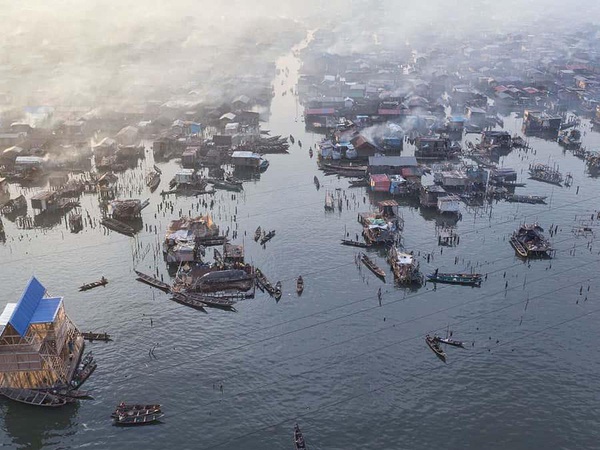
<p><strong><em>As Assembly weighs displacement, experts insist: “Fix the system, not just the settlement”</em></strong></p><p><strong style="background-color: transparent;"><em><br/></em></strong></p><p><strong style="background-color: transparent;"><em>~ By Emmanuel Daniji || A TwoCents Investigates</em></strong></p><p><img alt="" src="/media/inline_insight_image/3gfQ7X7fC_KRKwRtOI6uEseDm3U6k_EDUJGMoR4hKj4jSmJZN4bijc88n8Un-88PvTLjOCuAYFZa4vCUsZC7UeIQjryZpU_TfL-c_H5tXxHW7yM1kb4_BkvNReVbTzBF1A0O9xlw-Bavm4-HNvaOn4b_4l7SjEI17InB29evU8ZQ6KCglwCaUrKuI1Z1ZfgS.jpeg"/></p><p>Fresh deliberations within the Lagos State House of Assembly over the proposed relocation of Makoko residents have once again brought Nigeria’s most prominent waterfront settlement into focus.</p><p>Citing concerns over flooding, sanitation, and structural safety, policymakers argue that relocation may be necessary.</p><p>But urban planners, development organisations, and community advocates say the issue is far more complex—and warn that displacement without economic and structural planning could deepen, rather than solve, urban poverty.</p><p>Makoko’s relationship with government intervention has followed a familiar trajectory:</p><p>announcement, resistance, pause—and return.</p><p>Observers describe this as a repeating policy cycle, where relocation is proposed but rarely implemented successfully.</p><p>According to the Justice & Empowerment Initiatives (JEI), forced evictions in informal communities often fail when they are not supported by comprehensive resettlement frameworks.</p><p>The organisation’s long-standing work in Lagos communities suggests that residents are more receptive to upgrading initiatives than outright displacement, particularly when livelihoods are at stake.</p><p><img alt="" src="/media/inline_insight_image/Tyx_K9RdAtF4YRrTl_-0PZKhSgj3ijbDYvTlmY2IybStCHdWjmzKT3rZaYMhD7zJKsO8YEa_HMW0Mbs-znjHCHxtoOriJ-JDaKIqvVjEdoobATszvi2LwvF2O8EbKOH4TLI371GEfDCANeWeqzZ-5FtjJ3VTP28ZztFXmbMR5rixspS4yMnoT7z74k4ogU5j.jpeg"/></p><p><br/></p><p style="text-align: right; "><strong>DATA PROFILE: MAKOKO</strong></p><p style="text-align: right; "><strong>Population</strong>: 100,000 – 300,000</p><p style="text-align: right; "><strong>Location</strong>: Lagos Lagoon waterfront</p><p style="text-align: right; "><strong>Housing</strong>: Predominantly stilt structures</p><p style="text-align: right; "><strong>Economy</strong>: Fishing, water transport, petty trade</p><p style="text-align: right; "><strong>Key Risks</strong>: Flooding, fire outbreaks, sanitation gaps</p><p style="text-align: right; "><strong>Legal Status</strong>: Informal / unrecognised</p><p><br/></p><p><br/></p><p>Urban development experts say Makoko cannot be understood in isolation from Lagos’ wider housing crisis.</p><p>With millions of residents unable to access affordable housing, informal settlements have become an alternative for low-income earners.</p><p>The UN-Habitat notes that in rapidly growing cities, informal settlements are often driven by systemic housing shortages and inequality, rather than poor planning alone.</p><p>In effect, Makoko is not an anomaly—it is a reflection of structural gaps.</p><p><img alt="" src="/media/inline_insight_image/cgK2MvGYFROGN5z2Bpv6uAc0VWF3heVeq0JNYQRTxW1GD-_DwZGxWZCXOqEMcK-mfOVEQMjYf6fwpuPtx4LhQcQGTLDFZsOD8LVTx_tp37Lrgu4yG7D3dZMEIOl2trUokjIrTQqUKo1hEVThZdFHQH7fg16WFq0J27U6xyHJY07PC7nFVgPVn20TXtRSuXwU.jpeg"/></p><p><em><br/></em></p><blockquote><strong><em>“Informal settlements are symptoms of housing systems that are not keeping up with urban growth.”<br/></em></strong><strong><em>— Policy position aligned with UN-Habitat</em></strong></blockquote><p><br/></p><p>For thousands of residents, Makoko is not just a place to live—it is where income is earned.</p><p>Fishing networks, canoe transport, and informal markets form a tightly connected economic system built around the lagoon.</p><p>Development analysts warn that relocation plans that do not account for this system risk failure.</p><p>The World Bank has repeatedly stressed that proximity to livelihood is critical to successful resettlement outcomes.</p><p><img alt="" src="/media/inline_insight_image/0XpePoMBx4BPIuXfCbsmzUJvMUYe9xFiz8MeLnJl83igUKOZ35zu8lAO7VQO9RI4tkxpPNaU55mOdJz9yeeUh4moOR8hTcmMalQJ5I1V1QeQzzDqzqhhhNCfLnu084n3yaxAMnaCoqQO7vcoPkh9osphbMki049xU_ibjST7B78IsWjf0Zu23jCYAYzsr3PI.jpeg"/></p><p>Uadamen Ilevbaoje, a civic tech innovator and policy analyst familiar with Lagos’ urban development dynamics told Emmanuel Daniji:</p><p><em><strong>“You cannot separate people from their economic environment and expect stability. If jobs don’t move with them, people move back—or struggle.”</strong></em></p><p>Community engagement reports by Slum Dwellers International show that residents are not opposed to development—but prioritise:</p><ul><li>improved living conditions</li><li>access to services</li><li>security of tenure</li></ul><p>rather than relocation.</p><p>This aligns with global findings that community-led upgrading often delivers more sustainable outcomes than forced displacement.</p><p>Urban planning experts within the University of Lagos advocate for in-situ upgrading, a model that improves existing settlements without displacing residents.</p><p>British architect and theorist, John F.C. Turner once noted:</p><p><strong><em>“Upgrading allows government to intervene without destroying the social and economic systems that already exist.”</em></strong></p><p>This approach has been applied in multiple countries, often with measurable improvements in health, safety, and economic stability.</p><p>Makoko faces genuine environmental threats, including flooding and fire outbreaks.</p><p>However, experts argue these risks can be mitigated through design rather than displacement.</p><p>The Nigerian Institute for Oceanography and Marine Research has emphasised the importance of adaptive coastal strategies, including water-resilient housing and infrastructure.</p><p>Globally, such approaches include:</p><ul><li>floating structures</li><li>elevated housing systems</li><li>water-based sanitation solutions</li></ul><p>Countries facing similar challenges have adopted upgrading strategies:</p><ul><li>Indonesia: Kampung Improvement Programme</li><li>Brazil: Favela urbanisation initiatives</li><li>Kenya: Community-led slum upgrading</li></ul><p>These models prioritise integration, not removal.</p><p>Makoko’s informal status remains a major barrier to structured intervention.</p><p>Without official recognition, planning, regulation, and infrastructure investment remain limited.</p><p><img src="/media/inline_insight_image/ujNJhBVcVzr8OaClQhHF8YZg3E2_Zz70kac_rCMuVNcSWhzhCB5z17TIR9HKj8o8p4oGrw018Qo-eiZui5_zJoK2IHpX7CMfNoB2eoWdGEUHGPEFsBEr_hs8o6JnYK8yMU3ys8QhYXMIAk0FG-i_Tdhf2EDDYSsVAaXaTYQWujcskA0DDSAuWbIeFoGo5dwC.jpeg"/></p><p>International Development Expert, Olufunke Baruwa, suggest that designating Makoko as a special waterfront settlement zone could provide a pathway for controlled development.</p><p><em><br/></em></p><blockquote><strong><em>“Urban upgrading is not just social policy—it is long-term economic planning.”<br/></em></strong><strong><em>— Perspective reflected in World Bank frameworks</em></strong></blockquote><p><br/></p><p>Lagos continues to invest in large-scale infrastructure and new city developments, projecting a vision of a modern megacity.</p><p>Yet, informal settlements like Makoko remain outside formal planning frameworks.</p><p>Olufunke Baruwa said that this contrast underscores a key challenge: how to build an inclusive city while managing rapid urban growth.</p><p><br/></p><p>A growing body of research points to a multi-layered solution:</p><p><strong>1. In-Place Upgrading</strong></p><p>Improving housing, sanitation, and safety within the community</p><p><strong>2. Legal Recognition</strong></p><p>Formalising Makoko as a regulated waterfront settlement</p><p><strong>3. Infrastructure Adaptation</strong></p><p>Deploying water-based services and renewable energy systems</p><p><strong>4. Livelihood Protection</strong></p><p>Supporting existing economic activities and creating new opportunities</p><p><img alt="" src="/media/inline_insight_image/keU0-BtQILnXIln4QNd3B-AMmKTXN6jvNMBE9eo1AhVJfq9a_0qlZ7dEYTTz41gMVNCGsAx4duwu1eabN88PLLRDcMlz8mK6h3cEU-EnMchnQPWUeMbLetQDdiSVAn94mKssiYp__8FRlrZKS_lobuOkJ6p_MS2DOZcU16rrJjw0bG8fohmBdW6pQ49Pdtdm.jpeg"/></p><p>As policymakers revisit the future of Makoko, experts caution against relying solely on relocation.</p><p>The underlying drivers—housing shortages, economic inequality, and rapid urbanisation—remain unresolved.</p><p>Until these are addressed, similar settlements will continue to emerge.</p><p>Makoko, they argue, is not just a planning challenge.</p><p>It is a test of how Lagos chooses to build its future.</p><p><br/></p>


 147
147







Other insights from Bigdan













Referral Earning

Points-to-Coupons

Insights for you.


Who is a news reporter?
Last time, we discussed the role and stakes of journalism in our everyday life. This ti...
1271 views
9 upvotes
8 comments

THE FISH HOUSE
One morning, I went with my mum to the … should I say fish house or fish market or fish...
1186 views
32 upvotes
15 comments

Role and Stakes of Journalism
Journalism is a profession that entails collecting, processing, and broadcasting inform...
1100 views
4 upvotes
4 comments





What Makes a Good Journalist?
Journalism is a complex yet interesting job. One has to be passionate about it in order...
732 views
3 upvotes
4 comments



The Watermelon Question at the Univer...
It was another bright morning at the University of TwoCents Primary Annex, where curiou...
604 views
12 upvotes
10 comments






























Comments