Score |
415







INDEPENDENCE (The heaviness)
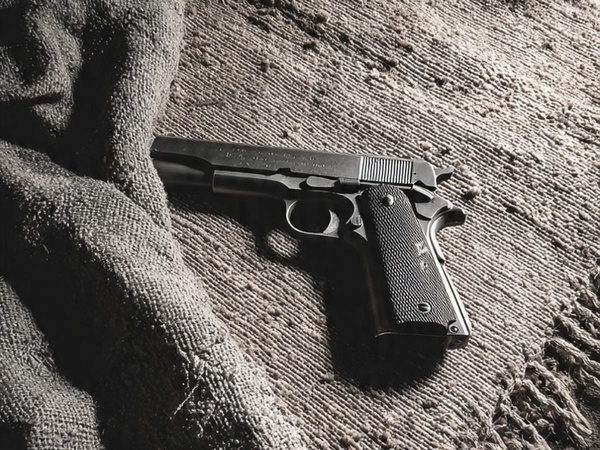
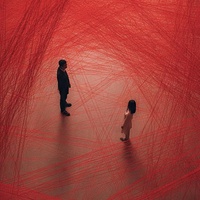
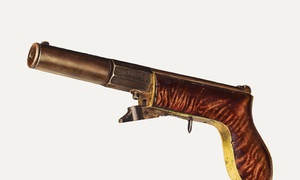
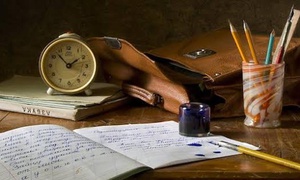
<p>I knew Morenike Ogunlana long before Lagos, and I am the one left to tell it because she never told it herself.</p><p><br/></p><p>She came to live with us in Ebute Metta when she was nine, after her father died in Ibadan. Her mother had passed away while bringing her into the world. My mother said she was a quiet child. That was not the right word. She was heavy. Even as a little girl, she would sit by the backyard well for hours and stare at the water without answering when you called her. She did not play ten-ten. She would forget to eat unless you put the spoon in her hand. When she was scolded, she did not cry. She just went still, like she was already somewhere far away.</p><p><br/></p><p>That heaviness followed her into her twenties.</p><p><br/></p><p>By 1959, she was twenty-three. She sewed buttons and hems for the soldiers at Yaba barracks for three pence a shirt. She slept on a mat in our back room that my mother could roll up whenever cousins came from Abeokuta. The room was not hers. The Singer machine was not hers. The British madams called her "small tailor" and dropped their husbands' khakis on her table without looking at her face.</p><p><br/></p><p>Then Sergeant Joseph Ajayi of the Nigeria Regiment came in August with a torn tunic. He was Yoruba like us, very straight in his khaki, and he spoke English the way the officers taught it: careful and proud. He waited while she fixed the seam and told her the British Union Jack would soon come down, that Dr. Azikiwe was on the radio every night, that by next year we would be our own country.</p><p><br/></p><p><img alt="" src="/media/inline_insight_image/AQO4K7PXPiLUFw1-BShi1IpFExbfuLqy6LotGTtU1AxVFDzV2pEfb6hKdHZDIrW_KAo6UOOtEa_741_X1aPTg9Sj.jpeg" style="-webkit-text-size-adjust: 100%;"/></p><p><br/></p><p>He came back. He did not have money for proper gifts, so he brought what he had. Groundnuts wrapped in newspaper. The Daily Times folded to the crossword. A Bobby Benson record we could not play because we owned no gramophone, so he hummed it for her instead. He sat on our low stool and taught her to write her full name in a school book, making the M big and looping. He said when independence came he would leave the army for a railway clerk job and they would rent two rooms in Surulere with a window facing the street.</p><p><br/></p><p>For four months, I watched the heaviness lift a little. She saved coins in a Milo tin. She laughed once when he tried to dance in our small room and knocked over the bucket. It was the first time I had heard that sound from her since she was a child.</p><p><br/></p><p>December came. Lagos was pasted with posters for Action Group and NCNC, lorries full of young men shouting, soldiers on extra duty after the rally fights.</p><p><br/></p><p>Everything changed. Joseph changed. One night, he told her at the beer parlor near the barracks that his captain had warned them about entanglements before the new postings, that his mother in Ilesha had already taken bride-price for a girl who could read the Bible well. He said he loved her but he could not carry her to Kaduna where he was being sent in January. The army was the only land he had.</p><p><br/></p><p>She walked home with me that night through the Marina, past the white offices still flying the British flag. She did not cry. She just held my hand too tight.</p><p><br/></p><p>He came the night before he left. My mother had sent me to the communal tap with two buckets. Morenike was alone with him for maybe ten minutes. When I returned, he was already at the doorway, adjusting his cap. She told me he had only asked for water, kissed her forehead the way an elder brother does, said "I’ll be back," and he left.</p><p><br/></p><p><img alt="" src="/media/inline_insight_image/IMG_5479.jpeg" style="-webkit-text-size-adjust: 100%;"/></p><p><br/></p><p>In the morning, she rolled the mat to sweep, the way my mother always insisted. Her hand hit cold steel. Her face changed. For one second, she looked surprised, almost like someone had finally trusted her with something important. Then she understood. Soldiers were not allowed to carry guns into town after the rallies. Our back room was just a convenient hiding place. Joseph had hidden his gun under the mat the night he left.<br/></p><p><br/></p><p>She sat with it on her lap a long time. She did not cry. She thought about all the sadness she had faced her whole life. Her parents' death. The borrowed room, borrowed machine. The name she had practiced that would never be on a lease. She thought about Joseph on the train north becoming the new Nigeria he talked about, and about herself staying to watch a flag change and the country gain independence that would not give her life change or her personal independence.</p><p><br/></p><p>That old childhood heaviness came back all at once, heavier than I had ever seen it.</p><p><br/></p><p>I told her it was best we give the gun to my mother to keep safe till Joseph came back for it, and she agreed, but she had already made up her mind. The clouds broke and I went out to pull the laundry off the line in the yard before everything soaked. I was gone maybe five minutes.</p><p><br/></p><p>When I came back, the back room door was closed. She had used the gun he hid.</p><p><br/></p><p>They would not let us keep her in the house overnight. Because it was a service pistol, the constables from Ebute Metta said she had to go to the mortuary at General Hospital that same afternoon. My mother knelt on our cement floor and held Morenike's cold hand and would not let go. She told them, "You did not know her when she was alive. You will not take her now like a case file." The older constable, a Hausa man, looked at my mother and then at the small room, and he let us wash her.</p><p><br/></p><p>My mother would not let anyone else touch her. She washed Morenike herself, the way you bathe a child, slowly, talking to her under her breath. She washed the heaviness off her face. I sat on the floor and plaited her hair in two simple cornrows, the same way I did the week she first came to us from Ibadan at nine years old. For the first time since that year, her face looked rested.</p><p><br/></p><p>We had no money for an undertaker. Baba Segun from the railway workshop knocked together a plain box from packing wood that night and would not take payment.</p><p><br/></p><p>We could not afford a church service. The catechist at St. Paul's in Ebute Metta said he could not read over her because of how she died. So we did not argue. At four o'clock, when the harmattan light was thin, only six of us walked with her to Atan Cemetery in Yaba. My mother, myself, two aunties from the compound, Baba Segun, and Mrs. Whitaker, the British madam who always called her "small tailor." Mrs. Whitaker did not send a maid. She came herself and laid a clean white handkerchief over Morenike's hands.</p><p><br/></p><p>There were no drums. The women just hummed a low hymn, "It Is Well," because my mother could not sing through her tears. When they lowered the box, my mother did not throw sand like the others. She opened Morenike's Milo tin and poured 40 pence she had saved for Surulere into the grave, so she would not go empty handed. She whispered, "O sun re o, omo mi. Sleep well, my child."</p><p><br/></p><p>We did not give her a big funeral. We gave her what she never had in life.</p><p><br/></p><p>Joseph was called back from Kaduna for questioning. He wept at the station and kept saying he only meant to hide it for one night.</p><p><br/></p><p>Morenike died in January, and that was when she finally got her own independence, not from the British, but from the cruel life that had held her since she was born. Nine months later, in October, Nigeria got its own.</p>

INDEPENDENCE (The heaviness)
By
 Olaitan Sanni
•
5 plays
Olaitan Sanni
•
5 plays
Olaitan Sanni
•
5 plays
0:00 /
0:00


 136
136



Other insights from Olaitan Sanni







Referral Earning

Points-to-Coupons

Insights for you.





THE MEETING
Sometimes it takes one meeting for our lives to change forever. It was never Femi'...
1379 views
14 upvotes
15 comments

OMÓ ÉSAN
They say the apple does not fall far from the tree, but I was the exception, or I was s...
1342 views
15 upvotes
10 comments





































Comments