Score |
58




I'm Jobless writing stories @ Guardian of Planet Mars




Easter Eggs Instead of Easter Chicken
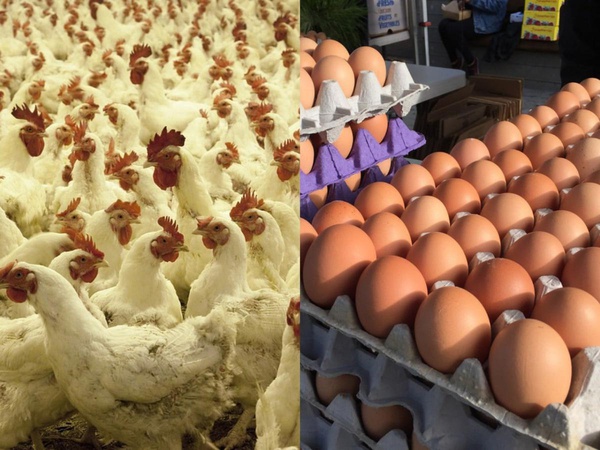
<p><span style="background-color: transparent;">Every Easter in Nigeria comes with familiar scenes.</span></p><p><span style="background-color: transparent;"><br/></span></p><p>Children running around compounds in new clothes.</p><p>Churches filled with hymns of resurrection.</p><p>And somewhere behind many homes, a chicken waiting for its final moment in a pot of pepper soup, stew, or jollof rice.</p><p><br/></p><p>For many Nigerian families, Easter has long been celebrated not just with prayers but with poultry. The season of resurrection traditionally meant <strong>killing a live chicken </strong>— a symbol of celebration, abundance, and communal joy.</p><p><br/></p><p>But this year, the story in many Nigerian homes sounds different.</p><p><br/></p><p>This Easter, the chicken may have quietly left the menu.</p><p><br/></p><p>And in its place, perhaps only <strong>an egg remains.</strong></p><p><br/></p><p>---</p><p><br/></p><h2><strong>When Markets Are Full but Baskets Are Empty</strong></h2><p><br/></p><p>Recent observations from <strong>Ile Epo Market in Lagos</strong> paint a troubling picture of Nigeria’s food economy.</p><p><br/></p><p>According to <strong>Abiodun Kosoko, Baba Loja General of Agbado Oke-Odo LCDA</strong>, the problem is not the absence of customers.</p><p><br/></p><p>Markets are still crowded.</p><p><br/></p><p>But the <strong>buying power has disappeared</strong>.</p><p><br/></p><p>“People come to buy foodstuffs but leave with less than planned,” he said.</p><p><em style="background-color: transparent;"><br/></em></p><blockquote><em style="background-color: transparent;">There are turnouts but no turnover.</em></blockquote><p><br/></p><p>The explanation lies in a chain reaction that begins far from Lagos markets.</p><p><br/></p><p>Food items that feed the city largely travel from the <strong>northern and neighbouring states</strong>. With rising fuel prices, the cost of transporting these goods continues to climb.</p><p><br/></p><p>Add to that the numerous levies along transport routes, and by the time these goods arrive in Lagos, their prices have swollen beyond the reach of many households.</p><p><br/></p><p>A bag of rice that once sold for <strong>₦50,000 now ranges between ₦56,000 and ₦58,000.</strong></p><p><br/></p><p>For traders, it means slower sales.</p><p>For families, it means smaller meals.</p><p><br/></p><p>---</p><p><br/></p><h2><strong>The Chicken That Became a Luxury</strong></h2><p><br/></p><p><img alt="" src="/media/inline_insight_image/8_ZNt0qWY4EUmW5GAhcloFDPHmZ2XCfA-gZB4J2ajqCRur7Zi4ys2EpxebPqFQOXA8s3HcM78JCk6iC0OUYb99ORjrglPq81jNF4zfna7t8P5d4YH-METd5x-lLqaORUlu5m4AqochFc2W_hzTGRlx5N7PAhNGJlcc4GXQKugnsNM35vvEvTY2907L-CoflJ.jpeg"/></p><p><br/></p><p>For meat sellers like <strong>Hammed Adekunle</strong>, the situation has become a daily struggle.</p><p><br/></p><p>Customers stare at prices in disbelief.</p><p><br/></p><p>Some accuse traders of profiteering.</p><p>Others attempt to negotiate drastic reductions.</p><p><br/></p><p>“A customer can price ₦5,000 worth of meat down to ₦1,000,” he explained.</p><p><br/></p><p>But traders themselves are not immune to the crisis.</p><p><br/></p><p>Livestock costs have increased.</p><p>Animal feed has risen.</p><p>Transportation has become expensive.</p><p><br/></p><p>The result is simple economics: <strong>prices must rise or the business collapses.</strong></p><p><br/></p><p>And in Nigerian homes, the chicken — once a modest symbol of celebration — is gradually turning into a <strong>luxury item</strong>.</p><p><br/></p><p>---</p><p><strong><br/></strong></p><h2><strong>Families Now Celebrate With Calculators</strong></h2><p><br/></p><p>Behind the statistics are real families making difficult choices.</p><p><br/></p><p>A teacher, <strong>Sola Ogunbade</strong>, explains how food shopping now requires painful prioritisation.</p><p><br/></p><p>“Foodstuffs are expensive. I must stick to my budget even if my list isn’t complete.”</p><p><br/></p><p>Staples like rice, beans, and vegetables — once considered basic necessities — now demand careful planning.</p><p><br/></p><p>For <strong>Mary Chukwu</strong>, a mother of three, the challenge is even more stark.</p><p><br/></p><p>Her focus is no longer on balanced meals.</p><p><br/></p><p>It is simply on ensuring <strong>her children do not go hungry.</strong></p><p><br/></p><p>Protein, fruits, and other nutritional components are gradually disappearing from daily meals.</p><p><br/></p><p>---</p><p><br/></p><h2><strong>The Easter Egg Question</strong></h2><p><br/></p><p><img src="/media/inline_insight_image/SRZBz4ccJGC3KCxVljSbFrhPk2ju60ZnKfh6Nx22qzVa_fK_xIPHFsku-QEgrCusPptxwJHMl2oU2XY3if4mGhSgpPzvRDC37fKky3bwwsyzMNSSK9GYCE-mSnhHok4GiSxiTBx-wxWetG24BwJrEiJQUyAgvdQ2WP7kOvFYZXC4nSBF-gN4UHruD19itzIt.jpeg"/></p><p><br/></p><p>In many Western countries, Easter celebrations revolve around <strong>eggs rather than chickens.</strong></p><p><br/></p><p>Eggs symbolize<strong> new life, rebirth, and resurrection</strong> — fitting metaphors for the Easter story.</p><p><br/></p><p>Children hunt for decorated eggs.</p><p>Families exchange chocolate eggs.</p><p>The symbolism focuses on <strong>life emerging from within.</strong></p><p><br/></p><p>Ironically, economic realities in Nigeria may now be pushing families toward a similar symbolism — not by cultural design, but by <strong>economic necessity.</strong></p><p><br/></p><p>A whole chicken may now be beyond reach.</p><p><br/></p><p>But an egg?</p><p>Perhaps still manageable.</p><p><br/></p><p>And so the question emerges quietly in Nigerian households:</p><p><br/></p><blockquote><em>If we cannot afford the chicken, can the egg still carry the celebration?</em></blockquote><p><br/></p><p>---</p><p><strong><br/></strong></p><h2><strong>Easter in the Time of Inflation</strong></h2><p><br/></p><p>For <strong>Funbi Idowu</strong>, this Easter feels different from any his family has experienced before.</p><p><br/></p><p>“We can’t afford a whole chicken,” he admitted.</p><p><br/></p><p>What was once a festive period marked by abundance has become a moment of <strong>scaled-down expectations.</strong></p><p><br/></p><p>The celebration will still happen.</p><p><br/></p><p>But quietly.</p><p><br/></p><p>Without the usual feast.</p><p><br/></p><p>---</p><p><strong><br/></strong></p><h2><strong>A Lesson Hidden in the Egg</strong></h2><p><br/></p><p>Perhaps this moment holds a deeper reflection for the nation.</p><p><br/></p><p>An egg is fragile, small, and humble.</p><p><br/></p><p>Yet it carries the <strong>possibility of life</strong>.</p><p><br/></p><p>In the same way, Nigeria today may feel economically fragile.</p><p>Families may be forced to celebrate modestly.</p><p><br/></p><p>But Easter reminds us that <strong>resurrection stories often begin in the most unlikely places</strong>.</p><p><br/></p><p>A borrowed tomb.</p><p>A sealed stone.</p><p>A quiet morning.</p><p><br/></p><p>Sometimes renewal begins with less — not more.</p><p><br/></p><p>---</p><p><strong><br/></strong></p><h2><strong>TwoCents Final Thought</strong></h2><p><br/></p><p>Maybe this Easter, the story is not about what is missing from the table.</p><p><br/></p><p>Maybe it is about <strong>what remains in the heart.</strong></p><p><br/></p><p>If the chicken disappears from the celebration,</p><p>and only an egg remains —</p><p><br/></p><p>Perhaps that egg still carries the message of Easter:</p><p><br/></p><p><strong>Hope is never finished.</strong></p><p><strong>It only needs the chance to hatch.</strong></p><p><br/></p><p>---</p><p><br/></p><p><strong>A TwoCents Insights</strong></p><p><em>By Emmanuel Daniji</em></p><p><br/></p><p><br/></p>


 14
14







Other insights from Bigdan











Referral Earning

Points-to-Coupons

Insights for you.


Who is a news reporter?
Last time, we discussed the role and stakes of journalism in our everyday life. This ti...
1170 views
8 upvotes
6 comments

THE FISH HOUSE
One morning, I went with my mum to the … should I say fish house or fish market or fish...
1093 views
32 upvotes
15 comments

Role and Stakes of Journalism
Journalism is a profession that entails collecting, processing, and broadcasting inform...
999 views
4 upvotes
3 comments








What Makes a Good Journalist?
Journalism is a complex yet interesting job. One has to be passionate about it in order...
632 views
2 upvotes
2 comments





























Comments