Score |
93




Content Specialist @ ICUC Social
Oslo, Norway
 2821
2821
 23724
23724
 168
168
 150
150
Do you think healing exists for every kind of pain?
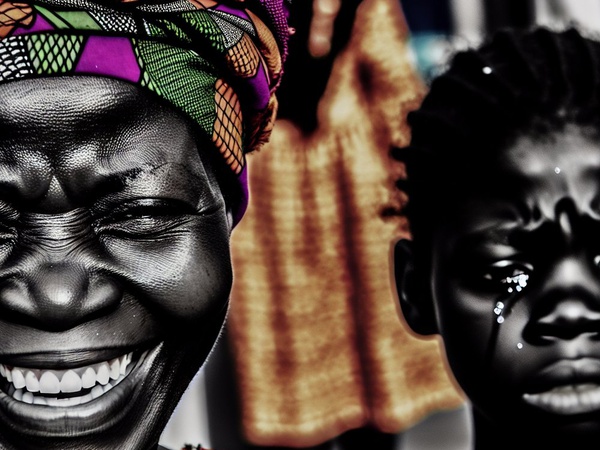
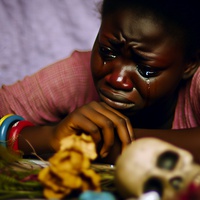
<p>Do you think healing exists for every kind of pain? Do you think there would come a time in the life of a man where he will bury all the hurt imprinted on his skin since birth, a time where the trauma and grief will become nothing but an empty memory. I have often been extremely curious about the idea of trauma and how it hovers over one’s life like a ghost or like an open wound bleeding over everything it touches.
</p><p>I would often sit with my characters and watch their behaviour and draw endless maps to where every reaction connects. <em>Why do you not trust people? Why do you flinch before every contact?</em> So if you read my work carefully, you would find a myriad of lost characters living and breathing evidence of hurt and pain that they do not know how to carry. You would find my poetry without hope at the end; long lines of metaphor telling of generational trauma that does not end. Sometimes I would ask a chatbox, <em>‘critically review this poetry piece…what is missing’ </em>and it would often say <em>‘It does not feel complete. The pain highlighted is repetitive, it should end with something hopeful or redemption’</em> and my reply never changes because I still don't know if trauma ends.
</p><p>Let’s take this persona for example,
</p><p>He was there
</p><p>at eight,
</p><p>with brains the size of a
</p><p>wrecked man
</p><p>and hands
</p><p>that trembled
</p><p>to their bones.
</p><p><br/></p><p>He was there
</p><p>at eight,
</p><p>with eyes that
</p><p>could spell pain
</p><p>as they watched
</p><p>that man
</p><p>break his mother’s wings,
</p><p>pull the halo off her crown,
</p><p>and send her
</p><p>spineless
</p><p>to that place without light.
</p><p><br/></p><p>He was there,
</p><p>at eight,
</p><p>when his ribs
</p><p>lost hold of his heart,
</p><p>and his eyes
</p><p>would not stop
</p><p>singing dirges—
</p><p>the melody
</p><p>of what it means
</p><p>to bear witness
</p><p>to the breaking.
</p><p>Do you think he would ever be completely healed, that one day this breaking would no longer have a hold on his thoughts, his decisions, his relationships and expressions. Would he one day see the man who had broken his mother’s wings and nothing comes to mind, no hate, no pain, not even forgiveness. Would the imprints left on his nervous system and psyche be eventually erased. I do not know the answer to this and I resist the impulse out of honesty to insist that time would heal everything or force the reality of closure when I still grapple with not knowing if it will happen.
</p><p><em>Is he bound to feel this way forever? To be stuck as a witness to the breaking and wear it like a weighted blanket.
</em></p><p>Sometimes, I fear that we demand closure when there is none and offer promises of redemption where they shouldn't be. Every grief must be productive and every painful past should be inspiring. We get obsessed with the idea of healing and society expects closure, forgiveness, or redemption, and it often feels uncomfortable to resist that. I think that maybe, it might be okay to stay with the pain rather than rush to resolution; to live bearing the truth that trauma will never go away and you may just learn to cope.
</p><p>The truth is that we never really get over it: Our mind and body do not forget. We wear it like a weighted blanket, heavy but familiar, a comfort stitched in pain. Years and years after, you will be going about your day and a sound, smell or the sight of something familiar will take you back to the day it all fell apart. Image by image will filter through…
</p><p><em>There is no one here,
</em></p><p>but my mind deceives me,
</p><p>so I see unwelcomed shadows.
</p><p>I see the silhouette of a ghost,
</p><p>I feel his hands, I smell the stench of him.
</p><p>I almost hear his voice—
</p><p>that croak soaked in years of nicotine.
</p><p>I hear it behind my ears,
</p><p>even when the radio screams 80s blues to the room.
</p><p><br/></p><p>My body feels heavy.
</p><p>I feel the weight of him pressing me down.
</p><p>I hear a version of me screaming,
</p><p>But I know my mouth is closed.
</p><p>I know it because my teeth sit harshly on my tongue,
</p><p>and blood fills my mouth.
</p><p>I taste fear, bitter and unyielding.
</p><p><br/></p><p>I am stronger now, faster,
</p><p>and with a blade clutched tightly in my fist,
</p><p>yet I cower, my arms fall to my side,
</p><p>and I am twelve again,
</p><p>broken and helpless.
</p><p>Healing is not linear, and it’s not guaranteed. While therapy, community, and self-awareness can lead to growth and relief, some wounds remain tender. Rather than forcing closure, perhaps we should allow space for stories that reflect the complexity of trauma, its endurance, its unpredictability, and its impact on identity. If you’re someone who lives with unresolved trauma, know that your experience is valid even if it doesn’t fit into a narrative arc of recovery. Sometimes, simply surviving is the most profound form of resilience.
</p><p><br/></p><p>
</p><p>
</p><p>
</p><p>
</p><p>
</p>


 163
163




Other insights from Esther Omemu









Referral Earning

Points-to-Coupons

Insights for you.



RECOVERING FROM A “GHOST”
Our generation is weird. Almost everyone I know has been ghosted at least once in their...
3166 views
19 upvotes
11 comments





Social media (in)tolerance?
I would like to believe that social media was created to bolster and improve communicat...
1975 views
10 upvotes
7 comments




LET'S TALK ABOUT FAKE FRIENDS
Quite often, we see post from contacts on our social media, about fake friends. Friends...
1478 views
9 upvotes
14 comments

MORALITY VS OUR LOVED ONES
It is no news that social media and maybe even the country is buzzing with the story of...
1419 views
5 upvotes
8 comments



What is the way forward?
“Any names yet? My nephew is from that school!”, cried a devastated aunt after getting ...
1400 views
10 upvotes
9 comments




























Comments