Score |
174




Creative Writer | History Student | I Love FOOD @ Lagos State University




"DAUGHTERS OF DEFIANCE" Yaa Asantewaa
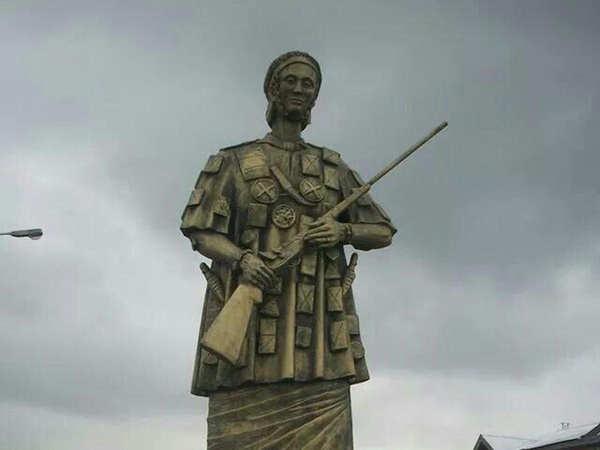
<p>When the men of the Ashanti kingdom faltered in the face of British pressure, it was a woman who stood and asked the question that would echo far beyond her time. If the men would not fight, then why should the women not rise in their place? </p><p>In that moment, Yaa Asantewaa did not just speak, she redefined what courage looked like.</p><p><br/></p><p>She was not born into obscurity, nor into ease. As Queen Mother of Ejisu in the Ashanti Empire, she occupied a position that was both influential and deeply rooted in tradition. The role of a Queen Mother was not ceremonial. <img alt="" src="/media/inline_insight_image/IMG_20260220_191721_908.jpg" style="background-color: transparent;"/></p><p><br/></p><p>It carried political weight, advisory authority, and a responsibility to the people. Yaa Asantewaa understood governance not as an abstract concept, but as something lived—something that shaped the dignity, security, and future of her people.</p><p><br/></p><p>By the late nineteenth century, that future was under threat. The British Empire had extended its reach into the Gold Coast, seeking control not only of land and resources but of identity and authority. Tensions had been building for years, marked by previous conflicts between the Ashanti and the British. But what transformed tension into outright defiance was not just the presence of colonial power, it was the demand for submission.</p><p><br/></p><p>The British governor, Sir Frederick Hodgson, made a request that was more than political—it was symbolic. He demanded the Golden Stool, the sacred symbol of Ashanti unity and sovereignty. To outsiders, it may have seemed like a seat of power. To the Ashanti, it was far more—it represented the soul of the nation, the very essence of their identity. To demand it was not just to challenge leadership, it was to attempt to strip a people of who they were.</p><p><br/></p><p>And in that moment, something shifted.</p><p><br/></p><p>Yaa Asantewaa saw clearly what was at stake. This was no longer about negotiation or cautious diplomacy. It was about preservation of culture, of dignity, of self-definition. When the chiefs hesitated, uncertain of how to respond to British demands, she did not.</p><p><br/></p><p>Her words were not wrapped in politeness or softened for acceptance. They were direct, cutting through fear and indecision. She called out the inaction around her, not to shame, but to awaken. If leadership meant anything, it had to mean resistance in the face of erasure.</p><p><br/></p><p>And so she led.<img alt="" src="/media/inline_insight_image/IMG_20260220_191721_932.jpg" style="background-color: transparent;"/></p><p><br/></p><p>The War of the Golden Stool in the early 19th century, was not just another conflict—it was a statement. Under her leadership, Ashanti forces laid siege to the British fort in Kumasi, refusing to surrender what could not be replaced. What made her stand out was not just that she fought, but that she led in a space where leadership, especially in warfare, had been dominated by men. She did not wait to be permitted into that role. She stepped into it because the moment required it.</p><p><br/></p><p>But defiance, especially against an empire, is rarely without consequence.</p><p><br/></p><p>The British response was swift and forceful. Their military strength, resources, and persistence eventually overwhelmed the resistance. The war, though powerful in its symbolism and initial impact, could not hold indefinitely against the scale of colonial force.</p><p><br/></p><p>Yaa Asantewaa was captured.........</p><p><br/></p><p>Exile followed.</p><p><br/></p><p>She was sent to the Seychelles, far from her land, her people, and the very symbol she had fought to protect. Exile is a particular kind of punishment, to be taken from the place that defines you, to live out your remaining years away from everything familiar, is a cost that cannot be easily measured.</p><p><br/></p><p>There were no immediate victories to soften that loss. No triumphant return. No restoration of the world as it had been before.</p><p><br/></p><p>And yet, what she did was not undone by how it ended.</p><p><br/></p><p>Because some acts of defiance are not meant to secure immediate success—they are meant to leave a mark that cannot be erased. Yaa Asantewaa’s resistance did something that extended far beyond the war itself. It preserved dignity in a moment designed to strip it away. It sent a message, both within and beyond the Ashanti kingdom, that submission was not inevitable. That even in the face of overwhelming power, there was still a choice to stand.</p><p><br/></p><p>Today, she remains one of the most significant figures in Ghanaian history, not simply because she fought, but because of what her fight represented. She disrupted expectations of leadership, of gender, of what resistance could look like. She stands as a reminder that courage is not always found where it is expected, and that history is often shaped by those willing to step forward when others step back.<img src="/media/inline_insight_image/IMG_20260220_191731_233.jpg" style="background-color: transparent;"/></p><p><br/></p><p>Her legacy began in a single moment of refusal. It lives in the continued telling of her story, in the recognition of women as leaders in struggles for justice, and in the understanding that identity is worth defending even when the cost is high.</p><p><br/></p><p>She did not wait for history to make room for her.</p><p>She stepped into it</p><p>and made it impossible to forget she had been there.</p>


 63
63



Other insights from Quietly Loud













Referral Earning

Points-to-Coupons

Insights for you.









THE OSU CASTE SYSTEM
You might have heard of the Osu caste system in Igbo land. In case you haven't, this is...
1510 views
2 upvotes
2 comments
































Comments