Score |
158




Creative Writer | History Student | I Love FOOD @ Lagos State University




"DAUGHTERS OF DEFIANCE" Wangari Maathai
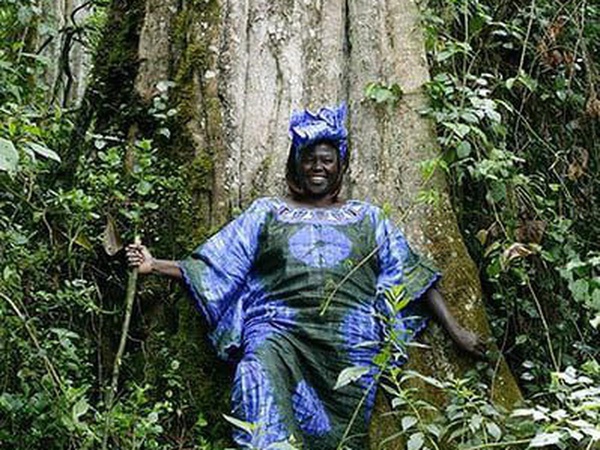
<p>In the highlands of Kenya, a young girl grew up watching the land that sustained her people slowly disappear. Trees that once shaded villages were cut down. Rivers that once flowed freely began to thin. The women who depended on the land for firewood, food, and water felt the burden first.</p><p><br/></p><p>That girl was Wangari Maathai and she would grow up to change the environmental and political history of Africa.</p><p><br/></p><p>Born on April 1, 1940, in rural Kenya, Wangari’s childhood was deeply tied to the land. Her early years were spent in the village, surrounded by forests, rivers, and farmland. Nature was not simply scenery; it was life itself. It provided food, medicine, and a sense of balance. But as Kenya moved through colonial rule and later independence, development began to come at a cost. Forests were cleared for commercial agriculture, and the effects were felt in villages like the one where Wangari had grown up.</p><p><br/></p><p>Unlike many girls of her time, Wangari had the rare opportunity to pursue formal education. Her academic brilliance took her far beyond the hills of Kenya. She studied in the United States during the historic Kennedy Airlift program that helped educate East African students abroad. Later, she returned home to continue her studies and eventually became the first woman in East and Central Africa to earn a PhD. </p><p><br/></p><p>But education did more than give her academic credentials. It sharpened her awareness of what was happening around her.</p><p><br/></p><p>When Wangari began working and engaging with rural communities, she listened closely to the struggles of women. They spoke about walking longer distances to find firewood. They spoke about rivers drying up and crops failing. What many leaders saw as economic development, she saw as environmental destruction and the people paying the price were the most vulnerable.</p><p><br/></p><p>For Wangari, the solution was surprisingly simple: PLANT TREES.<img alt="" src="/media/inline_insight_image/IMG_20260306_134301_585.jpg" style="background-color: transparent;"/></p><p><br/></p><p>In 1977, she founded the Green Belt Movement, a grassroots environmental organization that encouraged rural Kenyan women to plant trees in their communities. The idea was revolutionary. Trees would restore the soil, provide firewood, protect water sources, and create income for women.</p><p><br/></p><p>But what began as an environmental effort quickly became something much larger.</p><p><br/></p><p>Planting trees became an act of resistance.</p><p><br/></p><p>At a time when Kenya was facing political repression, corruption, and shrinking democratic space, Wangari refused to remain silent. She spoke boldly against land grabbing, government mismanagement, and the destruction of public forests. Her activism often placed her directly in conflict with political authorities. She was harassed, beaten, and arrested more than once.</p><p><br/></p><p>Still, she refused to back down.</p><p><br/></p><p>For Wangari, environmental justice, democracy, and women’s rights were deeply connected. If the land was being destroyed, it meant communities had no voice. If women had no economic power, they had no political power either. By organizing women to plant trees, she was also helping them claim dignity, independence, and influence.</p><p><br/></p><p>What began with a few seedlings eventually grew into a global movement.</p><p><br/></p><p>Through the Green Belt Movement, millions of trees were planted across Kenya. Women in rural communities gained income, leadership roles, and a stronger voice in their society. The initiative expanded beyond Kenya and inspired environmental activism across the African continent.</p><p><br/></p><p>Wangari’s courage and vision did not go unnoticed. In 2004, she made history when she was awarded the Nobel Peace Prize, becoming the first African woman to receive the honor.</p><p><br/></p><p>The recognition was groundbreaking not only for her but for the message it carried: protecting the environment is inseparable from protecting peace, human rights, and democracy.</p><p><br/></p><p>Her political journey also took her into government when she was elected to Kenya’s parliament in 2002. Even within the halls of power, she remained the same outspoken advocate who believed that ordinary citizens — especially women, had the power to shape their nation’s future.</p><p><br/></p><p>Today, the legacy of Wangari Maathai stretches far beyond the trees she helped plant.<img src="/media/inline_insight_image/IMG_20260306_134301_922.jpg" style="background-color: transparent;"/></p><p><br/></p><p>Across Kenya, restored landscapes tell the story of her environmental vision. Across Africa, activists and environmental movements draw inspiration from her courage. Around the world, she is remembered as a voice that connected climate, justice, and human dignity long before it became a global conversation.</p><p><br/></p><p>Wangari Maathai proved that defiance grows root by root, seed by seed — until it becomes a forest that the world can no longer ignore.</p>

"DAUGHTERS OF DEFIANCE" Wangari Maathai
By
 Quietly Loud
•
1 play
Quietly Loud
•
1 play
Quietly Loud
•
1 play
0:00 /
0:00


 43
43



Other insights from Quietly Loud












Referral Earning

Points-to-Coupons

Insights for you.


The Resource Curse
Whenever I think of the plight in Africa, a certain song from my childhood days comes t...
1801 views
7 upvotes
5 comments


BREAST IRONING
Ever heard of the breast ironing practice? well, I am from Cameroon and we have strong ...
1624 views
17 upvotes
21 comments


Africa is rich or poor ?!
To address the issue of poverty and underdevelopment in Africa, it is important to cons...
1284 views
5 upvotes
9 comments


CONCEDING SUPREMACY - THE OWN GOAL PH...
An African man would never agree to the notion that the whites are superior to us. The ...
1237 views
2 upvotes
0 comments

THE REAL WAKANDA IS THE DEMOCRACTIC R...
Sometimes life imitates art, other times art imitates life
The first time I watched...
1113 views
6 upvotes
7 comments

FOR MY WOKE BROTHERS
The death of the Queen of England, is no more breaking news. It's been a week since the...
1100 views
2 upvotes
2 comments

Why have African societies failed?
Where 2 or 3 Africans are gathered, conversations about our countries are sure follow. ...
1081 views
3 upvotes
3 comments


THE DEVIL'S IN THE DETAILS
How do you get someone reliant on you? To get them to follow your every instruction? Th...
742 views
5 upvotes
6 comments




Glory of the Colosseum
The glory of the Colosseum once symbolized the peak of human resilience, the fight for ...
677 views
2 upvotes
4 comments































Comments